
Last updated October 15, 2026
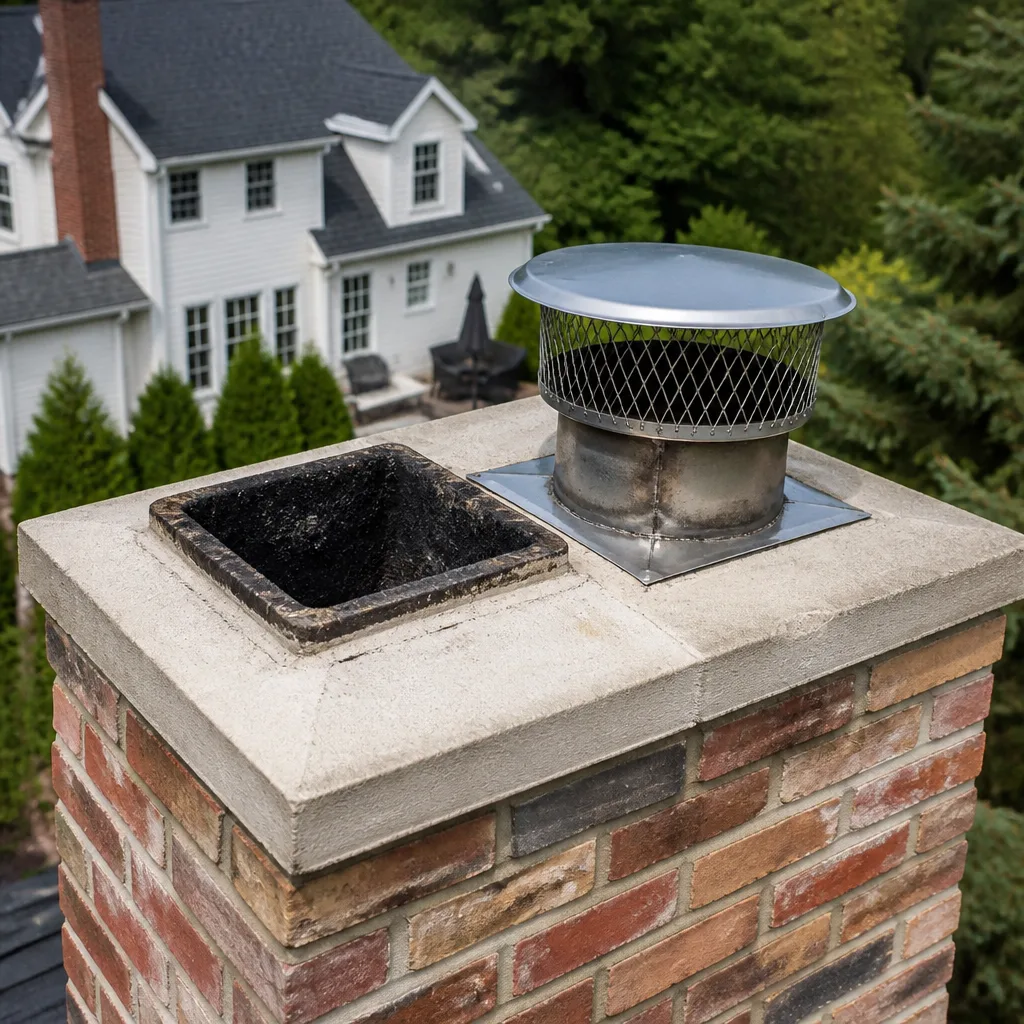 Sweep & inspection
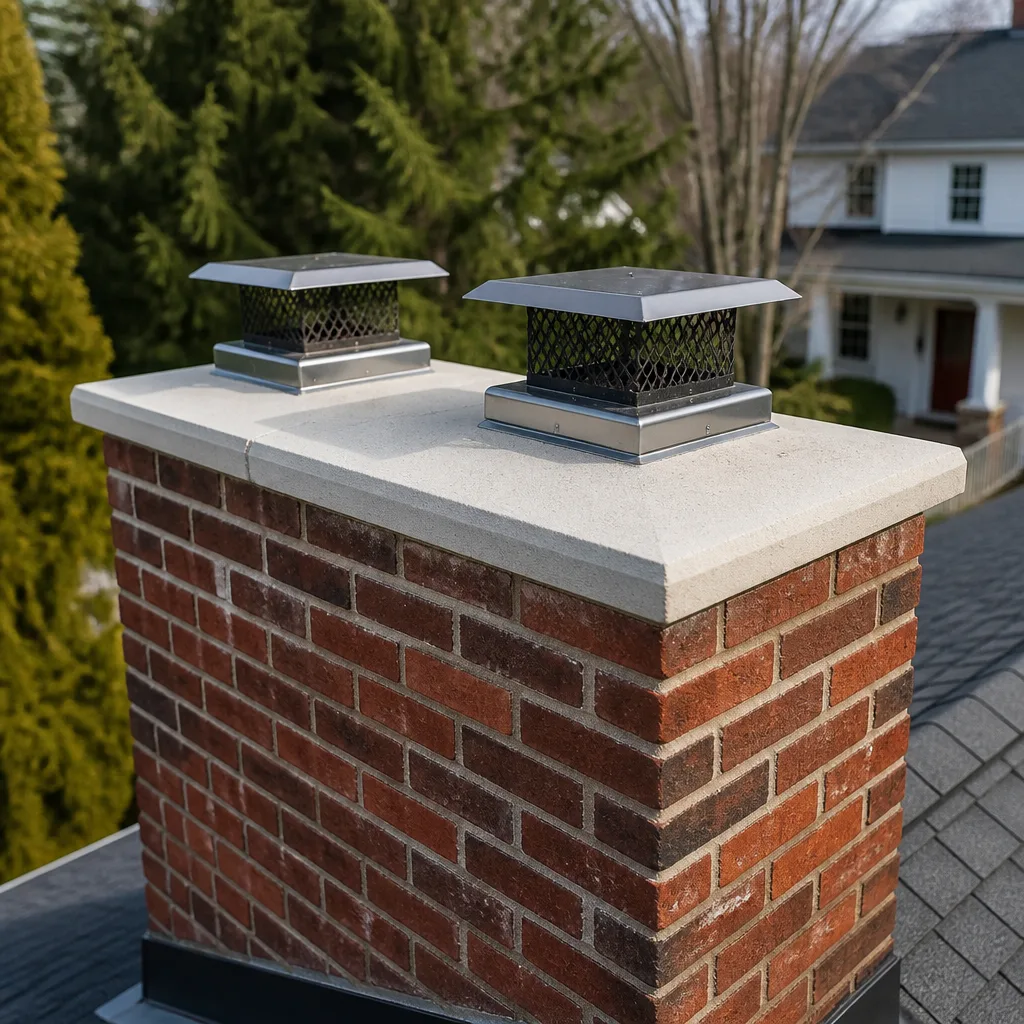 Caps & crowns
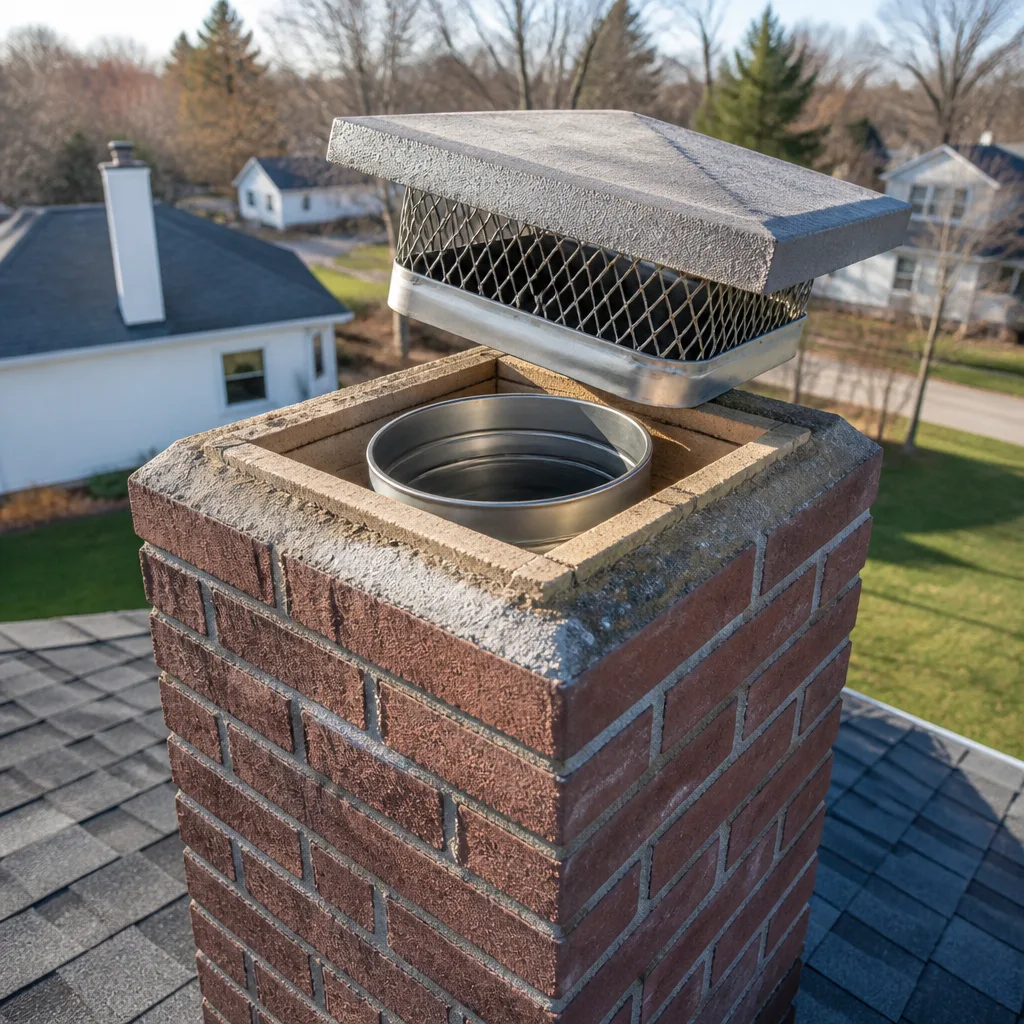 Flue relining
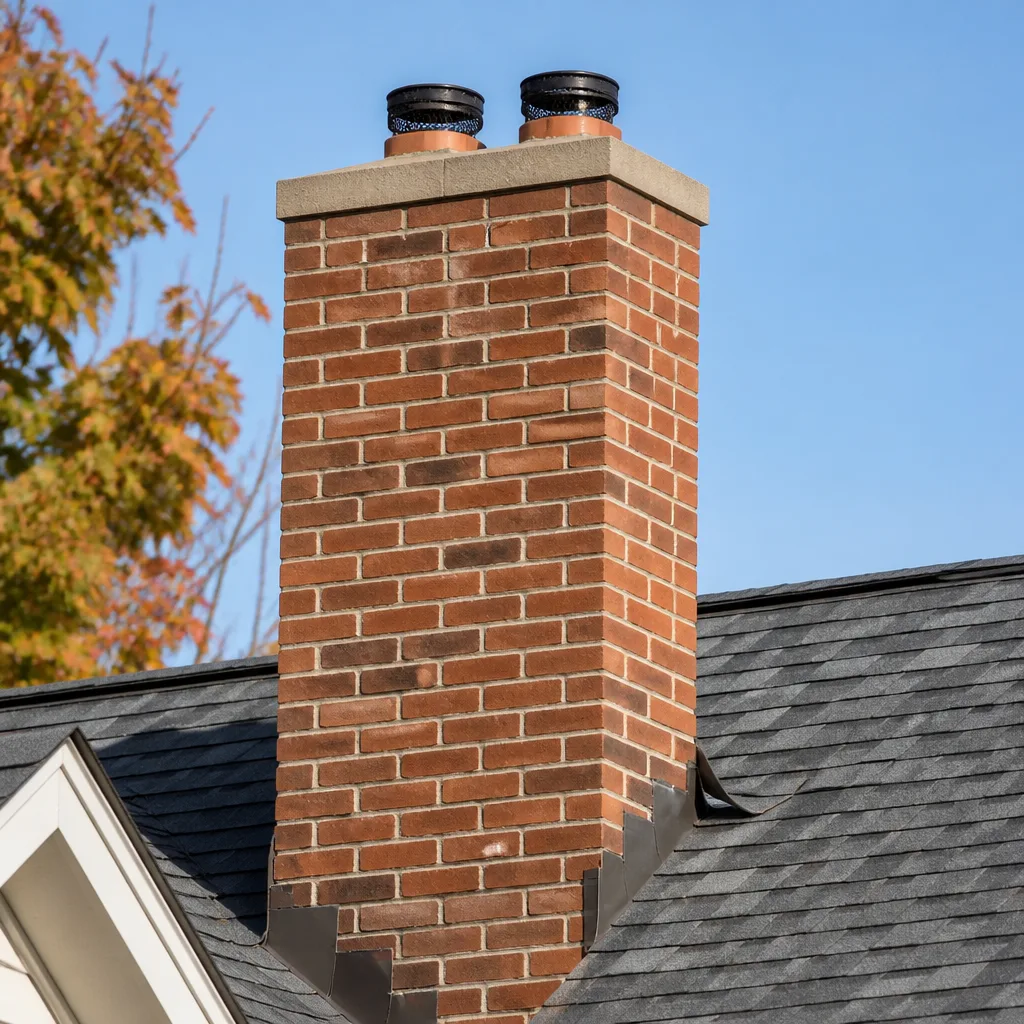 Masonry repair
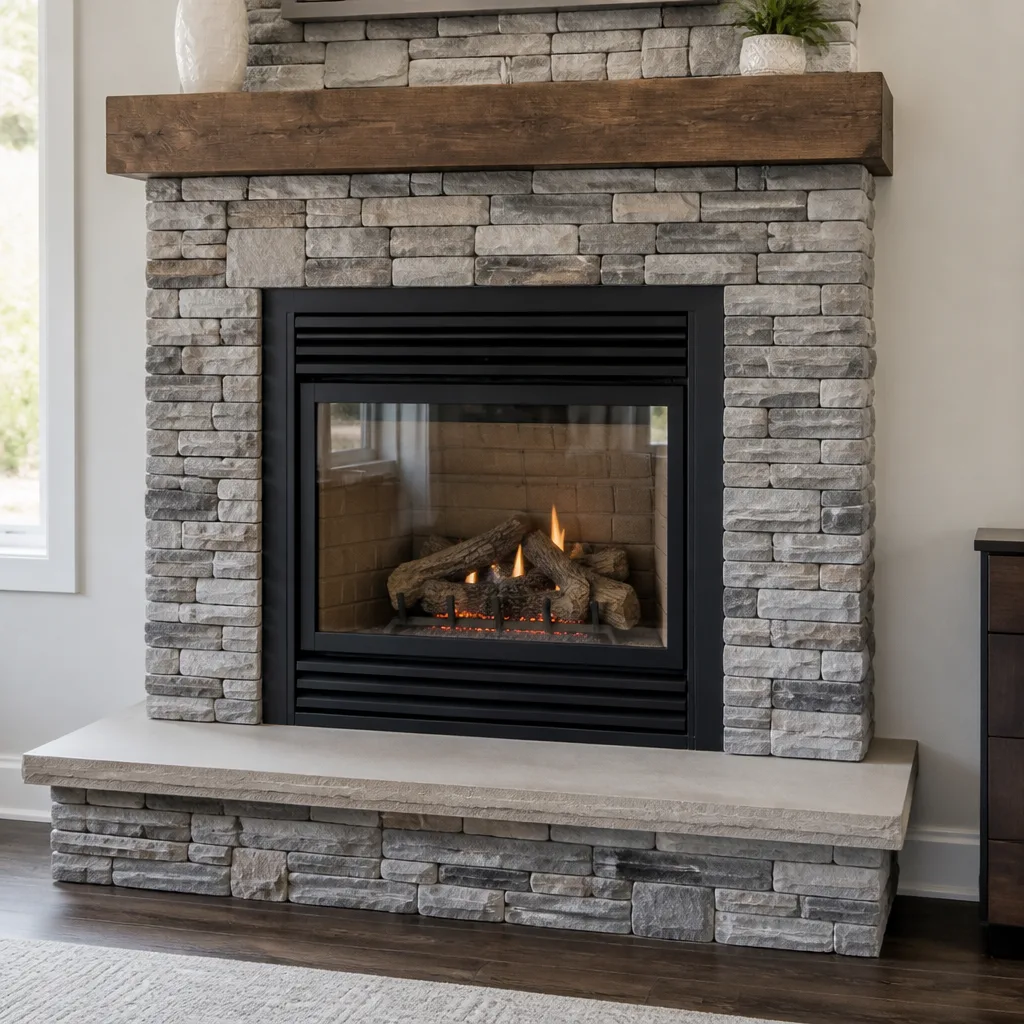 Gas fireplace service
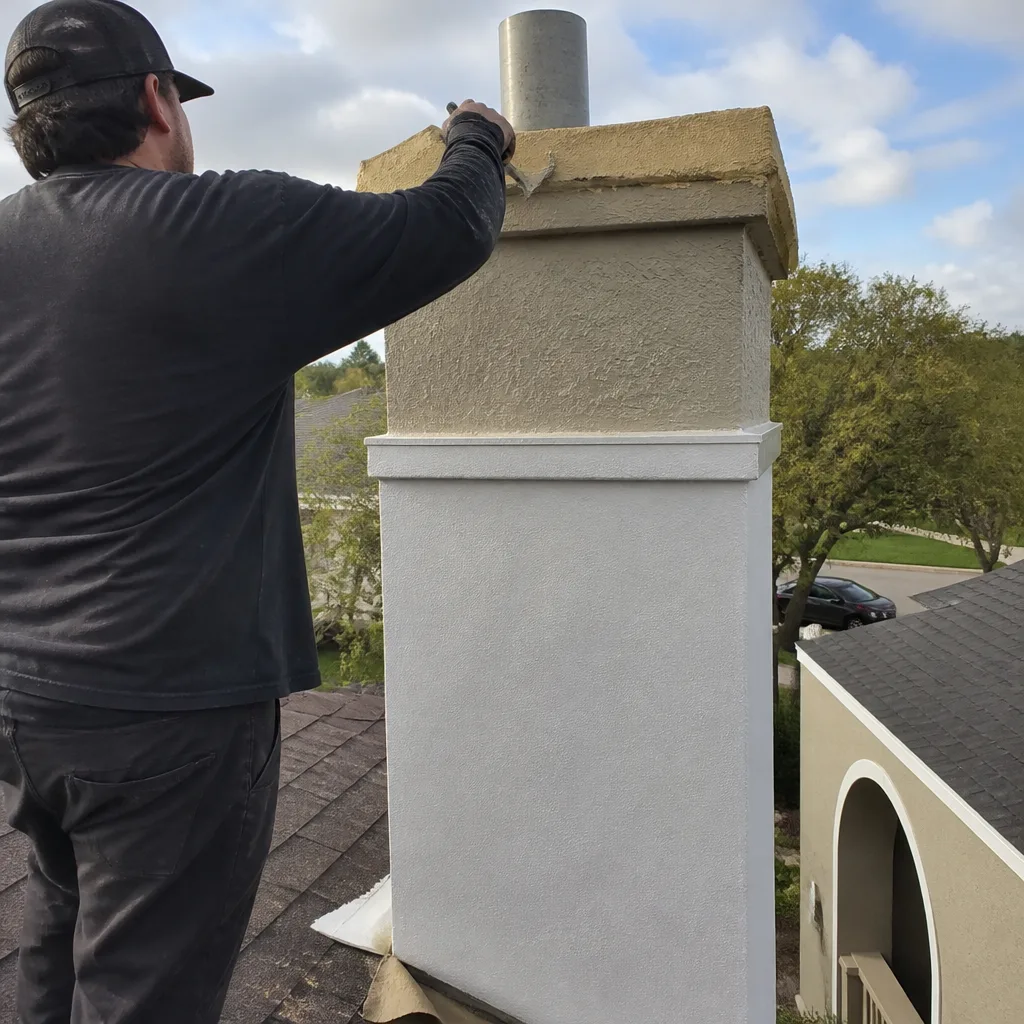
Level 1 sweep and inspection to the NFPA 211 annual standard - flue, crown, cap, and flashing checked and photographed
Chimney sweep logs do not sweep chimneys. They loosen some creosote - which then falls where a brush and vacuum still have to collect it.
DIY vs Professional Chimney Cleaning: The Tampa Homeowner’s Decision Guide
A chimney brush and rods from a home improvement store will remove surface soot effectively. They will not tell you that the flue tile behind that soot has a crack routing carbon monoxide toward your master bedroom. That is the actual job a professional visit is designed to do. This guide walks through what a careful DIY chimney cleaning in Tampa can genuinely accomplish, where the hard limits are, and what the real chimney cleaning cost looks like for Tampa homeowners when you account for the things you cannot see from the hearth. You will learn the specific conditions that make DIY safe, the conditions that make it dangerous no matter how careful you are, and how to use a professional sweep as a diagnostic baseline you maintain yourself between visits.
Styles & brands we work with
Quick Answer
For most Tampa homeowners, the right answer is a hybrid: hire a professional chimney sweep in Tampa for a full inspection and cleaning at least once, then decide whether light maintenance between visits makes sense for your fireplace. A careful DIY cleaning can remove loose surface soot, but it cannot identify cracked flue tiles, moisture intrusion, or animal activity hiding behind that soot. If you have not had a camera inspection in the last year, a professional visit is the safer first step.
Table of Contents
- What a Careful DIY Cleaning Can Actually Accomplish
- What DIY Cannot Do: The Invisible Chimney
- Three Conditions Where DIY Cleaning Is Genuinely Sufficient
- Four Conditions That Make DIY Dangerous
- The Real Cost Comparison: Tampa Edition
- Tampa-Specific Risk: Chimney Swifts and the Migratory Bird Treaty Act
- The Hybrid Approach: Professional Baseline, Smart Maintenance
- Common Mistakes to Avoid
- When to Call a Professional
- Frequently Asked Questions
- The Bottom Line
What a Careful DIY Cleaning Can Actually Accomplish
Let’s be honest about what a homeowner with a chimney brush, drop cloths, and patience can do. In our experience servicing fireplaces across Tampa, from Seminole Heights bungalows to New Tampa stucco homes, a careful DIY cleaning removes loose creosote and surface soot from the firebox and the lower portion of the flue. That is real work, and it matters. A clean firebox burns more efficiently and produces less smoke into the living room. Removing the loose soot that has flaked onto the smoke shelf reduces the musty smell that creeps into the house during humid Tampa summers; see our seasonal chimney cleaning care guide for Tampa for timing tips.
You can also inspect what you can reach: the damper assembly, the firebox walls, the visible portion of the flue from below. You can verify the damper opens and closes. You can see if mortar joints in the firebox are crumbling. These are useful observations, and a homeowner who knows their fireplace well is a better customer and a better caretaker of their own home.
But here is what a Tampa homeowner needs to understand: the portion of the flue you can see from the firebox is usually 5 to 8 feet of a system that runs 15 to 30 feet to the chimney cap. The most dangerous problems we find on chimney inspection in Tampa are almost never in the part a homeowner can see from below. They are mid-flue hairline cracks, deteriorated mortar at the roofline, or a partially collapsed flue tile behind a bend. None of those are visible without a camera or rooftop access.
What DIY Cannot Do: The Invisible Chimney
The honest accounting most DIY guides skip is this: a chimney is a system, and most of that system is hidden. The visible soot is the easy part. The difficult part is determining whether the structure that contains the fire is still sound. A chimney brush removes what you can see. It does not assess what you cannot.
Here is what a professional sweep evaluates during every visit, and what a DIY cleaning leaves unanswered:
- Liner condition: Clay flue tiles crack over time. Hairline cracks can open into gaps as the tile expands and contracts with heat cycles. A cracked liner allows carbon monoxide and hot gases to reach the wood framing around the chimney chase. We use a camera to photograph every foot of the flue. You cannot see a mid-flue crack from below, no matter how bright your flashlight.
- Moisture intrusion: Tampa’s summer rain, measured in afternoon thunderstorms every day from June through September, works its way into cracked chimney crowns and deteriorated flashing. Moisture soaks into the masonry, and the damp soot and creosote takes on an acidic quality that attacks mortar and liner. A homeowner sees a dark stain. A professional sees the start of a spalling brick repair or a liner replacement.
- Animal activity: Raccoons, squirrels, chimney swifts, and bats all use Tampa chimneys as nesting and roosting sites. A nest of dried leaves, twigs, and animal matter packed against a hot flue is a fire hazard. It is also frequently invisible from below. Disturbing an active nest can be dangerous for the animals, and with chimney swifts, it is also a federal offense.
- Damper function: A damper that does not seat fully lets cooled, humid Tampa air drop into the fireplace all summer. That is the source of the damp smell families notice in July. Testing a damper properly requires accessing the throat from the firebox and knowing what a healthy seal feels like versus one that is warped or rusted.
These are not rare findings. In our work across Tampa Bay, from Westchase to Carrollwood to Hyde Park, we see cracked liners in roughly one in five homes that have not had an inspection in five years. We see animal activity in nearly every neighborhood with mature trees and roof access. None of these are visible from the hearth.
Three Conditions Where DIY Cleaning Is Genuinely Sufficient
We do not argue against DIY generally. We argue against DIY without information. There are situations where a homeowner can safely handle the work themselves, provided they have had a professional inspection within the past 12 months and know what they are working with. Here are the three conditions where pulling out the brush makes sense:
- You have a documented clean baseline. A professional chimney inspection in Tampa with camera documentation confirmed the liner is intact, the mortar is sound, and the damper seats properly. You are maintaining, not discovering.
- Your burning is light and infrequent. You burn 8 to 12 fires a year, use seasoned hardwoods, and have never seen more than a thin gray film of soot. The creosote buildup from this level of use is minimal, and a homeowner can typically remove what is there with a basic brush kit and a shop vacuum with a HEPA filter.
- You have straightforward access. Your flue is a short, straight masonry run with no offsets, your chimney is easily reached for a visual look at the cap, and you are comfortable working on a ladder safely or have a second person spotting you. In Tampa homes built in the 1950s through the 1970s, many flues are relatively short and straight, which makes homeowner access more feasible than in newer multi-story builds.
If all three conditions are met, a careful homeowner can brush the firebox and lower flue, vacuum the smoke shelf, and check the damper. This is maintenance. It is not a substitute for inspection, but it is a reasonable way to keep a clean system clean between professional visits.
Four Conditions That Make DIY Dangerous
There are situations where no amount of care makes DIY chimney cleaning safe. These are the conditions we want every Tampa homeowner to recognize before they open the firebox door and start scrubbing:
- You have not had a camera inspection in over a year. You are working blind. If the flue has a hidden crack, brushing loosens debris and can dislodge already failing tile fragments. You may be making a compromised system worse without knowing it. The first clean on an uninspected chimney should always be a diagnostic visit.
- You smell smoke in the house after fires, or you smell a damp, musty odor in the summer. Smoke odor means the draw is failing or the flue is obstructed. Damp odor means moisture is entering somewhere. Both are symptoms of problems that brushing cannot fix and may temporarily mask if you remove the surface evidence.
- You see or hear birds, or you find nesting material in the firebox. In Tampa, chimney swifts nest in residential chimneys from April through September. They are federally protected under the Migratory Bird Treaty Act, and disturbing an active nest or harming the birds carries fines and legal exposure. Professional sweeps know how to identify active nests, close off access, and schedule work around nesting season. We have seen homeowners unknowingly break the law because a guide told them to “clear the obstruction.”
- Your chimney has an active creosote buildup that is shiny, tar-like, or thick. Glazed creosote is the product of low-temperature fires, often from burning unseasoned wood or from the short, hot bursts common in a Tampa fireplace used occasionally. It is highly concentrated fuel. Brushing it poorly can leave most of it in place, and burning against a partially cleaned liner with glazed creosote remaining is more hazardous than leaving it alone until a professional can address it.
If any of these apply, stop. Put the brush down. Call a professional. The cost of a cleaning is a fraction of the cost of repairing a liner or dealing with a chimney fire, and it is dramatically less than the legal and ethical cost of harming protected wildlife.
The Real Cost Comparison: Tampa Edition
The standard comparison people make is this: a chimney brush kit costs $40 to $80 at a Tampa home improvement store, while a professional sweep costs $180 to $300. So the DIY route saves $100 to $250. That math is fine if the only variable is clean versus dirty. But the actual decision is clean versus diagnosed. A professional sweep includes a full Level 1 inspection, camera documentation, and a written report. A DIY cleaning includes none of that.
Here is what the real cost comparison looks like for a Tampa homeowner when hidden problems go undetected:
- The cost of a missed liner crack: A flue liner repair or replacement runs $2,000 to $7,000 depending on whether a stainless liner is installed or a cast-in-place product like HeatShield is used. If the crack allows hot gases into the chimney chase, the repair can involve framing and drywall work on top of the liner work. A $250 professional sweep would have found the crack in year one.
- The cost of an undetected animal nest: An active nest against a hot flue is one of the most common causes of chimney fires. A smoldering nest can damage the liner, crack flue tiles, and spread embers. Repairing that damage starts around $1,500 for minor work and goes up from there. The sweep fee is smaller than the deductible on most homeowners policies.
- The cost of improper damper reassembly: A homeowner who removes or loosens a damper plate to clean the smoke shelf and does not reseat it correctly creates a permanent air leak. In a Tampa summer, that means your air-conditioned air escapes up the chimney for months. The energy cost alone can exceed the price of a professional cleaning in a single season.
- The value of documentation: If you ever sell your Tampa home, a record of professional inspections and cleanings is a selling point. A log of “I cleaned it myself” is not, because it carries no independent verification of liner condition. Buyers ask about the chimney. Sellers with a documented maintenance history close faster.
Most standard chimney sweeps in Tampa run between $180 and $300, with inspections often bundled at no additional cost beyond the sweep. For families burning regularly, that is an annual cost of less than $1 per day. The question is not whether you can afford a professional. The question is whether you can afford to skip one.
Tampa-Specific Risk: Chimney Swifts and the Migratory Bird Treaty Act
Chimney swifts are small, sooty-brown birds that forage over Tampa’s neighborhoods at dusk, and they nest in residential chimneys across the city every spring and summer. This is not a rare occurrence. We see active swift nests in chimneys from Davis Islands to Lutz to Brandon throughout the nesting season, which runs approximately April through September in Central Florida.
Chimney swifts are federally protected under the Migratory Bird Treaty Act. It is illegal to disturb an active nest, remove eggs or young, or harm the birds. A homeowner who climbs onto the roof and starts sweeping a chimney with an active swift nest is violating federal law, even if they do not know the nest is there. That is the trap: the homeowner cannot see the nest from the ground, and the first sign of activity is often the birds themselves, which means the nest is already in use.
Here is what a Tampa homeowner needs to know about swifts and chimney work:
- Active nests are protected, period. If swifts are entering and leaving your chimney, no cleaning or repair work should occur until the birds have left for the season. Professional sweeps know how to verify activity and will schedule work accordingly.
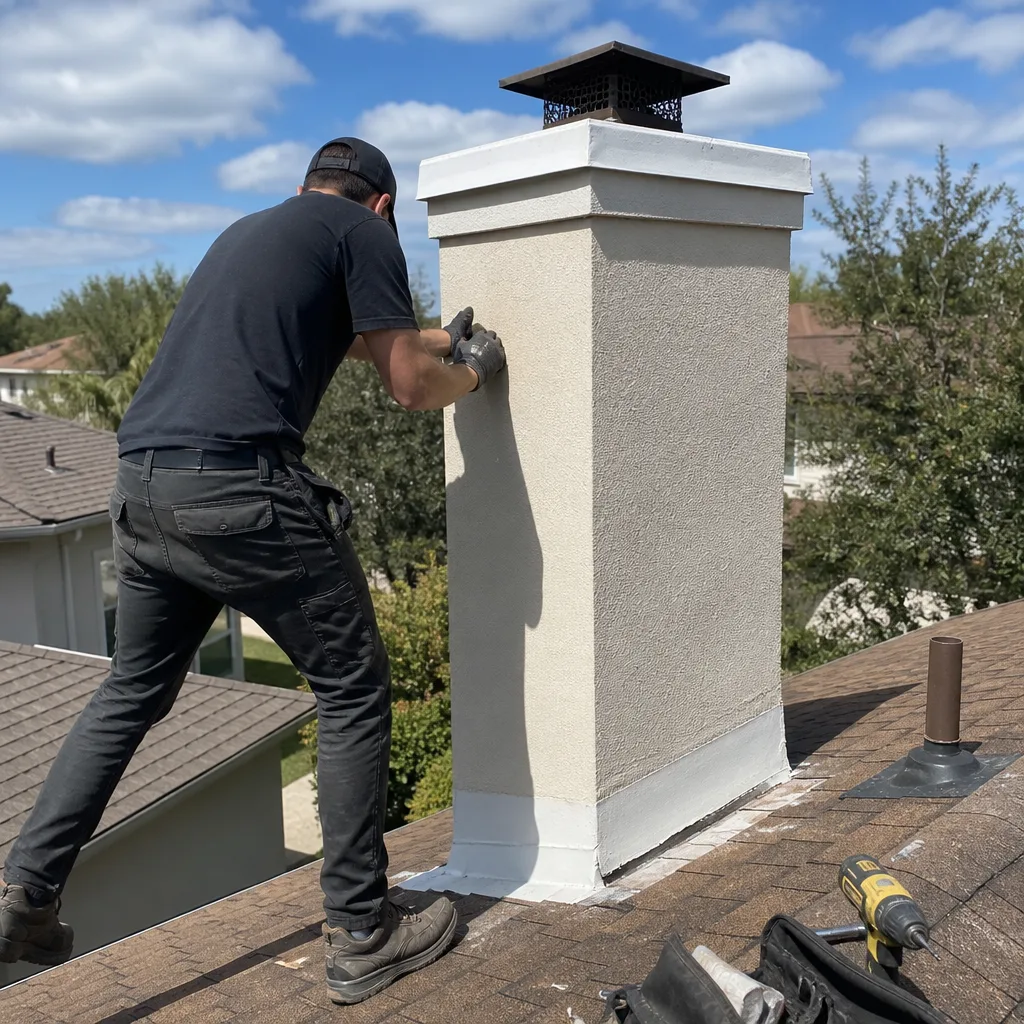
- Preventive exclusion is legal and encouraged outside nesting season. A properly installed chimney cap with the right mesh size keeps swifts out. Caps should be installed during the non-nesting months, typically October through March in Tampa.
- The consequence of a mistake is a federal citation. Fines under the Migratory Bird Treaty Act can reach thousands of dollars, and ignorance of the nest is not a viable defense. A professional sweep takes on this liability as part of their service. A DIY homeowner assumes it alone.
This is one of the clearest cases for a professional in the Tampa market. A chimney brush kit does not include the training to recognize swift activity, and the legal exposure of a mistake far exceeds the cost of a professional visit. Danny Cortes and the team at Kindling Chimney Tampa are familiar with Tampa’s swift population, and we schedule around nesting season every year.
The Hybrid Approach: Professional Baseline, Smart Maintenance
The most practical answer for a Tampa family that uses their fireplace regularly is not a binary choice between DIY and professional, as our step-by-step guide to hiring a chimney cleaning contractor in Tampa explains. It is a baseline plus maintenance approach. You use a professional for what requires a professional, and you handle the light work yourself between visits.
Here is the sequence we recommend:
- Start with a full professional sweep and inspection. The first visit establishes your baseline. The sweep removes all creosote and soot. The inspection documents liner condition, mortar condition, damper function, and cap condition. You leave with a camera report showing exactly what your flue looks like. This is your reference point.
- Ask the technician what you can safely maintain yourself. For a homeowner with a straight flue and light burning, we typically say: brush the firebox and the first few feet of the flue if you want to, vacuum the smoke shelf, and keep the area around the damper clean. If the flue has bends or the homeowner is uncomfortable on a ladder, we recommend leaving all of it to us.
- Maintain what you can see. Keep the firebox clean. Remove ash after every use once it is fully cool. Watch for anything unusual: a new smell, a new stain, a new crack in the firebox walls. Early reporting is free. Late reporting is expensive.
- Schedule professional inspections each year. Even if you maintain the visible surfaces yourself, a yearly inspection with a camera verifies that the invisible system is still intact. For a family that burns 20 to 30 fires a year, an annual sweep plus inspection is appropriate. For a family that burns 5 to 10 fires a year, an inspection every 12 to 18 months may be sufficient, with a sweep as needed based on buildup.
This hybrid approach saves money without sacrificing safety. You do not pay for professional cleanings you can handle yourself, and you do not gamble on hidden problems going undetected. That is the balance most Tampa families land on once they understand what a sweep actually does.
Common Mistakes to Avoid
- Using a wire brush on a clay tile liner. Wire brushes can scratch and score clay flue tiles, creating the starting points for future cracks. Poly brushes are safer for clay liners. Many DIY kits include a wire brush, and many homeowners do not know the difference.
- Vacuuming with a standard shop vac without a HEPA filter. Chimney soot is fine enough to pass through standard filters and become airborne in the house. Families in Tampa with kids and pets should not be dispersing soot into the living room air. A HEPA filter and a sealed vacuum are the minimum for indoor use.
- Skipping the drop cloth and shoe protection. Soot tracks. Once it is on the carpet or tile, it is difficult to remove. Our technicians follow the C.A.R.E. values on every visit: shoe covers and drop cloths go down on arrival, nothing is moved without asking, and a photo of the clean-up is taken before the crew leaves. A DIYer needs to match that discipline or accept the consequences on their floors.
- Cleaning during swift nesting season without checking for activity. As covered above, this is a federal violation. If you see birds entering the chimney in spring or summer, stop and wait.
- Assuming a clean-looking firebox means a clean flue. The firebox can be spotless while the flue above has significant creosote buildup. The two are not causally related. What builds up on the flue walls depends on flue temperature and burn habits, not on how often you sweep the firebox.
- Ignoring a damper that does not close tightly. A leaky damper costs money every month in the summer as conditioned air escapes. It also lets humid Florida air into the firebox, which degrades masonry over time. A damper that does not seat is a repair item, not a preference.
- Cleaning an uninspected chimney after moving into a new home. When you buy a home in Tampa, the seller’s chimney may not have been used or inspected in years. A homeowner who starts working on an unknown system is uncovering problems without a plan. The first professional visit should precede any DIY work on a newly purchased home.
When to Call a Professional
Call a professional if you have not had a camera inspection in the last 12 months, if you smell smoke or dampness in the house, if you see or hear animals in the chimney, or if you see thick, shiny creosote in the firebox. Call if your damper does not close fully, if your chimney cap is missing or rusted, or if you bought the home and have no documentation of chimney maintenance. None of these are DIY situations. Kindling Chimney Tampa offers free estimates in Tampa, and a live person answers the phone 24 hours a day, 7 days a week. Call (850) 290-0897 to schedule a sweep or ask about an inspection.
Frequently Asked Questions
Most standard chimney sweeps in Tampa run between $180 and $300, with a Level 1 inspection typically included. The price varies based on flue height, accessibility, and whether significant creosote removal or animal debris removal is required. Call (850) 290-0897 for an exact quote on your home. Estimates are free.
For a family that burns 20 or more fires a year, an annual sweep and inspection is the right cadence. For lighter use of 5 to 10 fires a year, an inspection every 12 to 18 months with a sweep as needed is usually sufficient. The inspection is the non-negotiable part because it catches what you cannot see. Tampa’s humid summers make annual inspections particularly valuable for catching moisture intrusion early.
You can maintain a clean fireplace yourself if you have had a professional camera inspection within the last year, your burning is light, and your flue is a short, straight run. What you cannot do yourself is verify liner condition or diagnose hidden problems. The DIY work should follow a professional baseline, not replace it. Call (850) 290-0897 if you have never had a camera inspection.
Creosote accumulates in proportion to use, but the bigger risk in Tampa is what develops while the chimney sits idle: moisture damage from summer rain, animal nests built in the off-season, and liner deterioration that goes unnoticed because no one is looking. A chimney that has not been inspected in three years should be treated as an unknown system, not a maintained one. The first step is a professional inspection, not a cleaning.
Not always. Hairline cracks can sometimes be addressed with a resurfacing product like HeatShield if the structure is otherwise sound. More significant damage may require a stainless liner from a brand like DuraFlex or Olympia Chimney. The only honest answer comes from a camera inspection that shows the full length of the flue. We show you the video before recommending any repair, and we tell you plainly when work can wait. Call (850) 290-0897 to schedule an inspection.
Chimney swifts nest in Tampa chimneys from approximately April through September, and they are federally protected. You cannot legally disturb an active nest, and covering the chimney while birds are present harms them. The right time to install a chimney cap is outside nesting season, typically October through March. A professional can verify activity and install the cap safely. Call (850) 290-0897 to schedule a cap installation.
The Bottom Line
The DIY versus professional chimney cleaning decision in Tampa is not really about cleaning skill. It is about diagnostic ability. A homeowner can remove soot. A homeowner cannot see a cracked liner, an active animal nest, or moisture damage hidden behind the soot. The smart sequence is simple: start with a professional sweep and camera inspection to establish a clean, documented baseline. Then maintain the visible surfaces yourself if your situation allows. Then inspect with a camera every year regardless of how clean the firebox looks. That sequence protects your family, your home, and your budget better than either approach alone. For more guides & resources, visit our blog.
Written by Danny Cortes, Owner at Kindling Chimney Tampa, serving Tampa since 2003.
See the difference
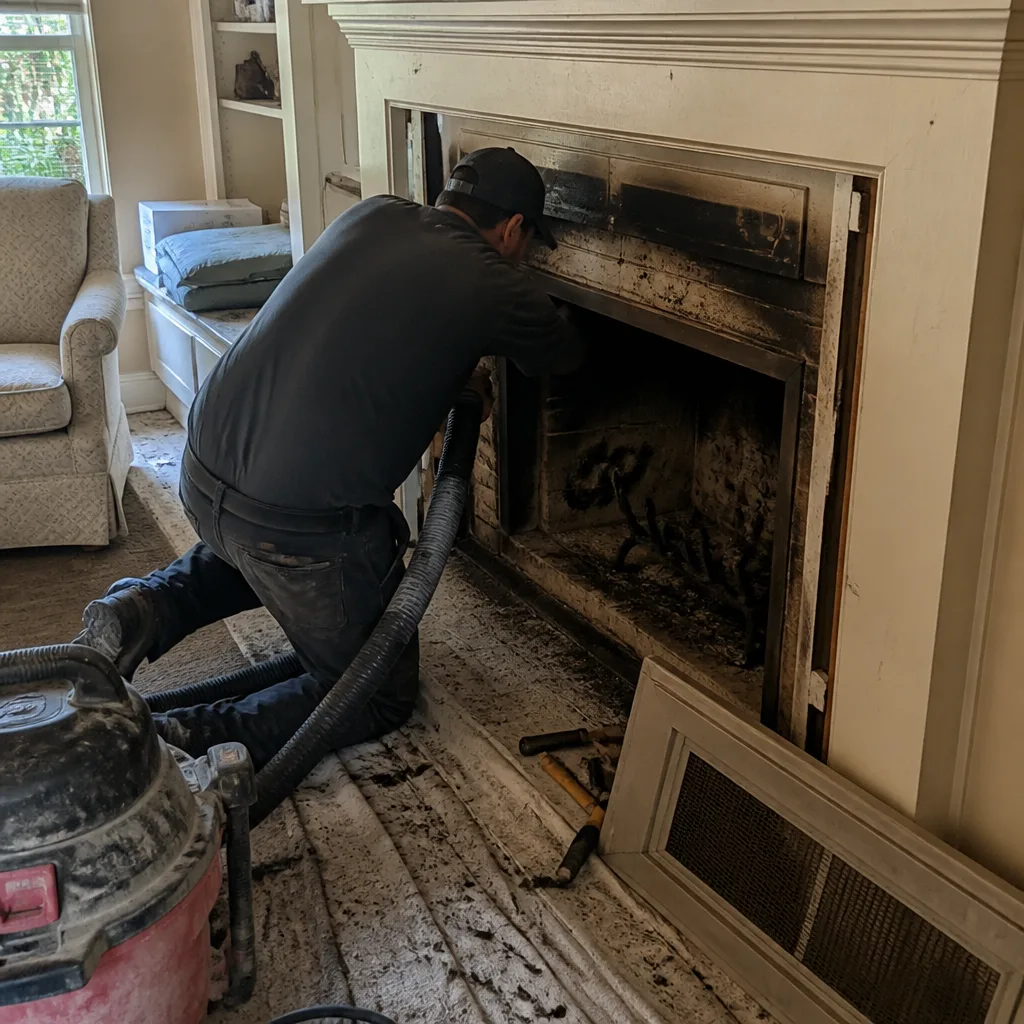 Before
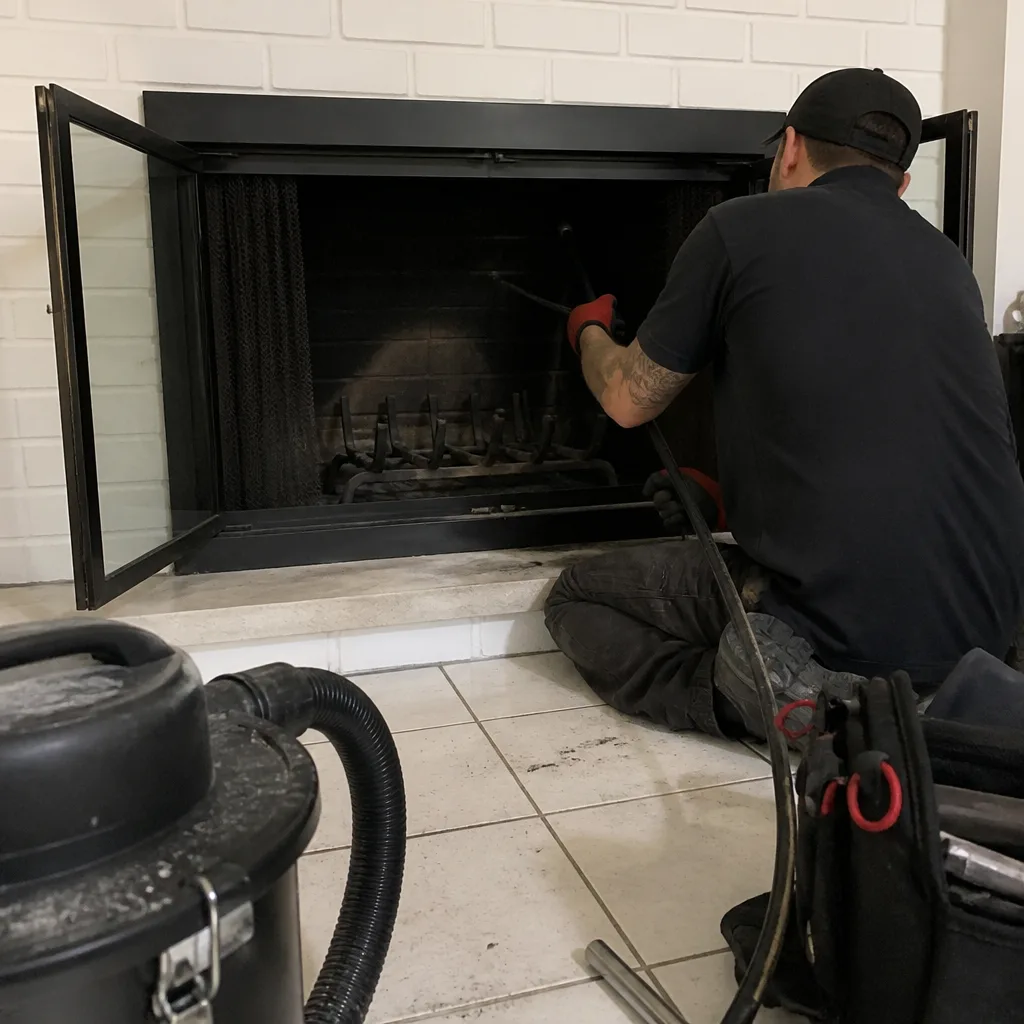 After
After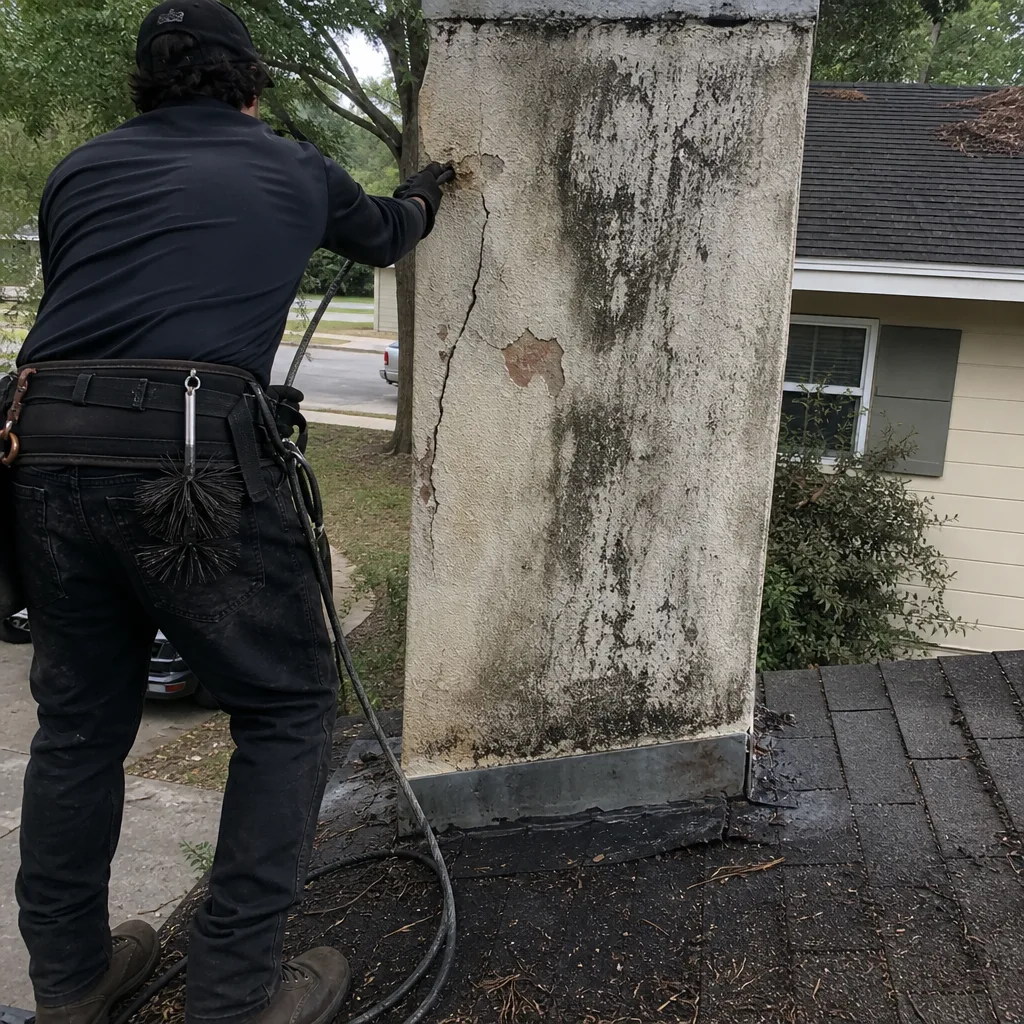 Before
 After
After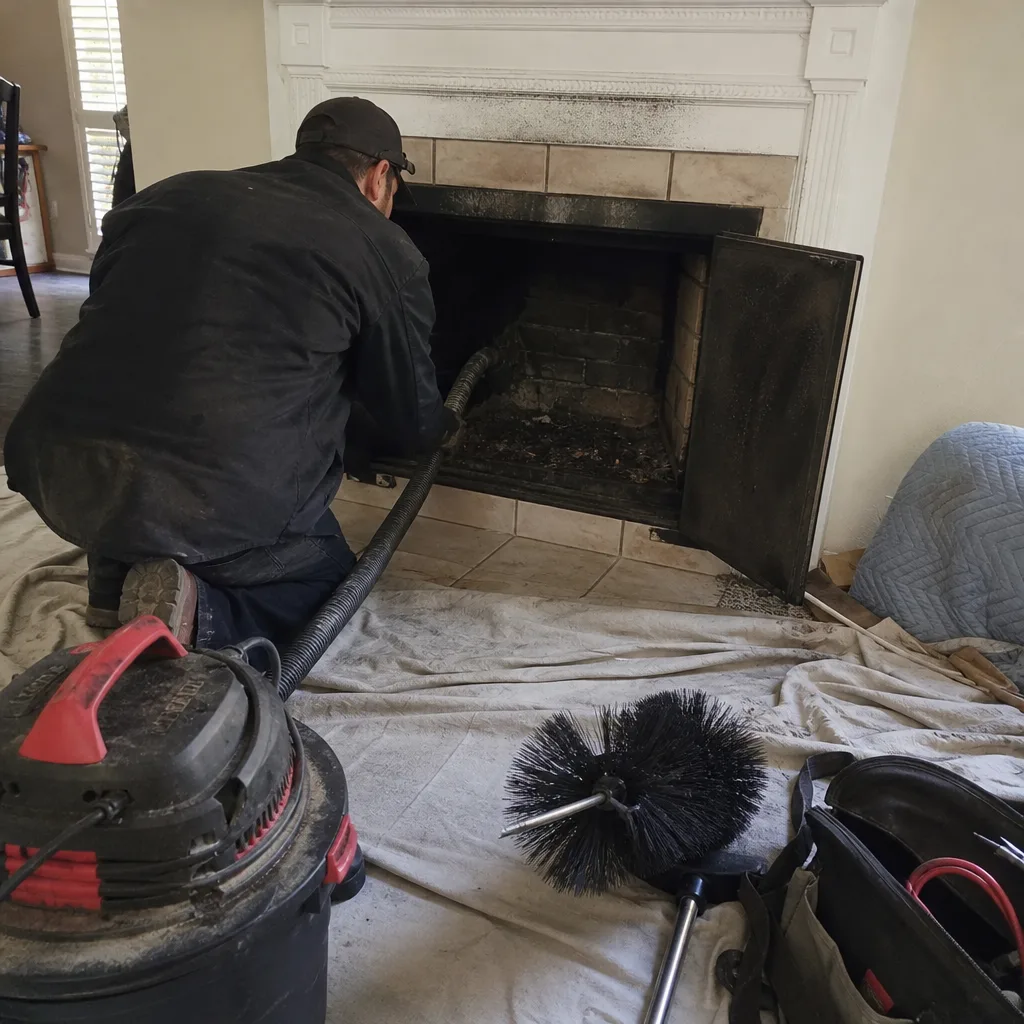 Before
 After
After