
Last updated October 15, 2026
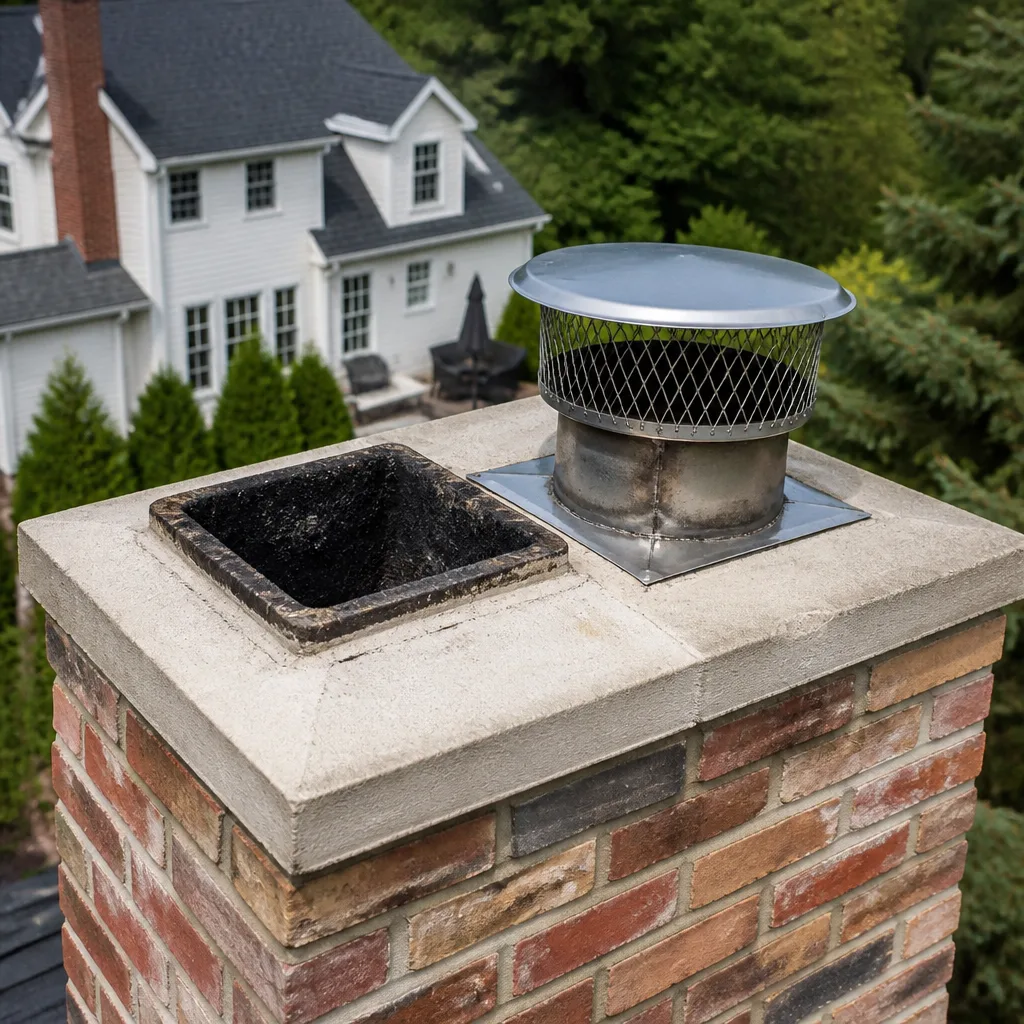 Sweep & inspection
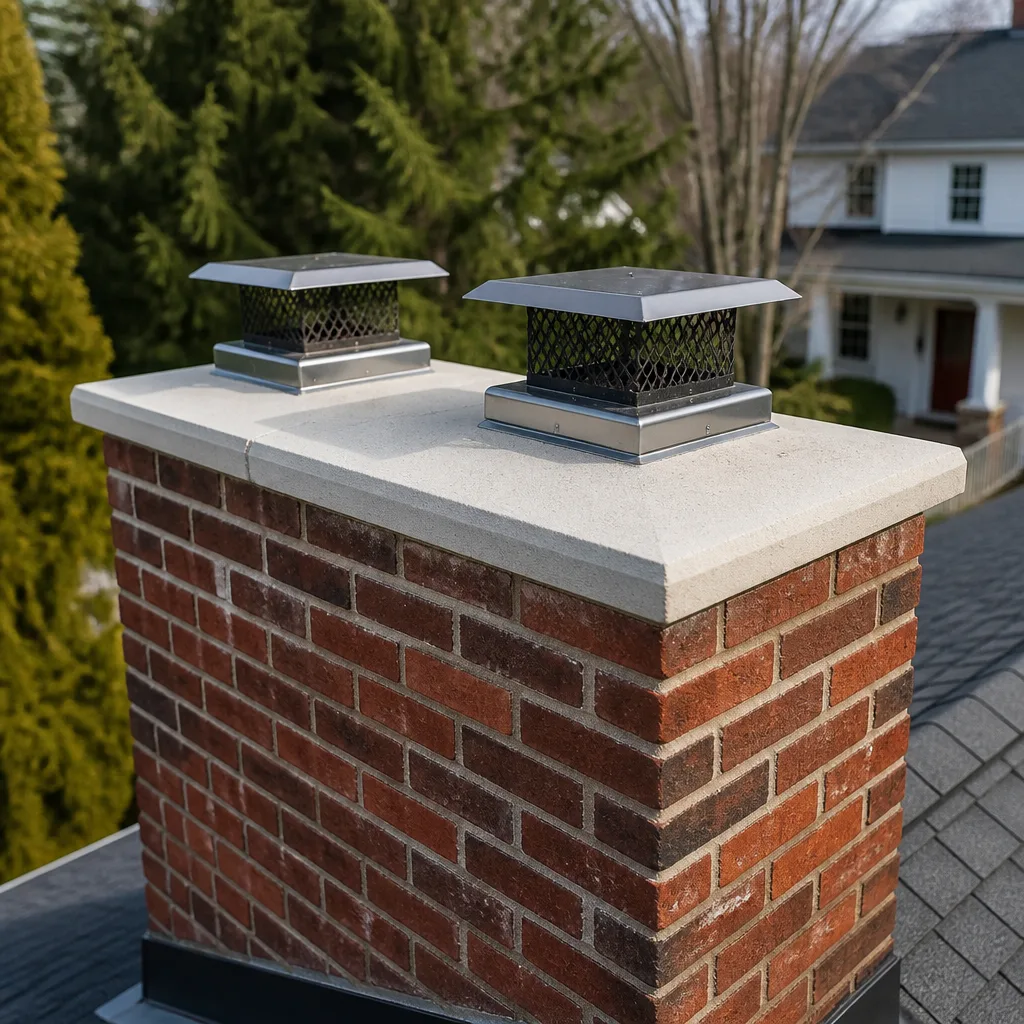 Caps & crowns
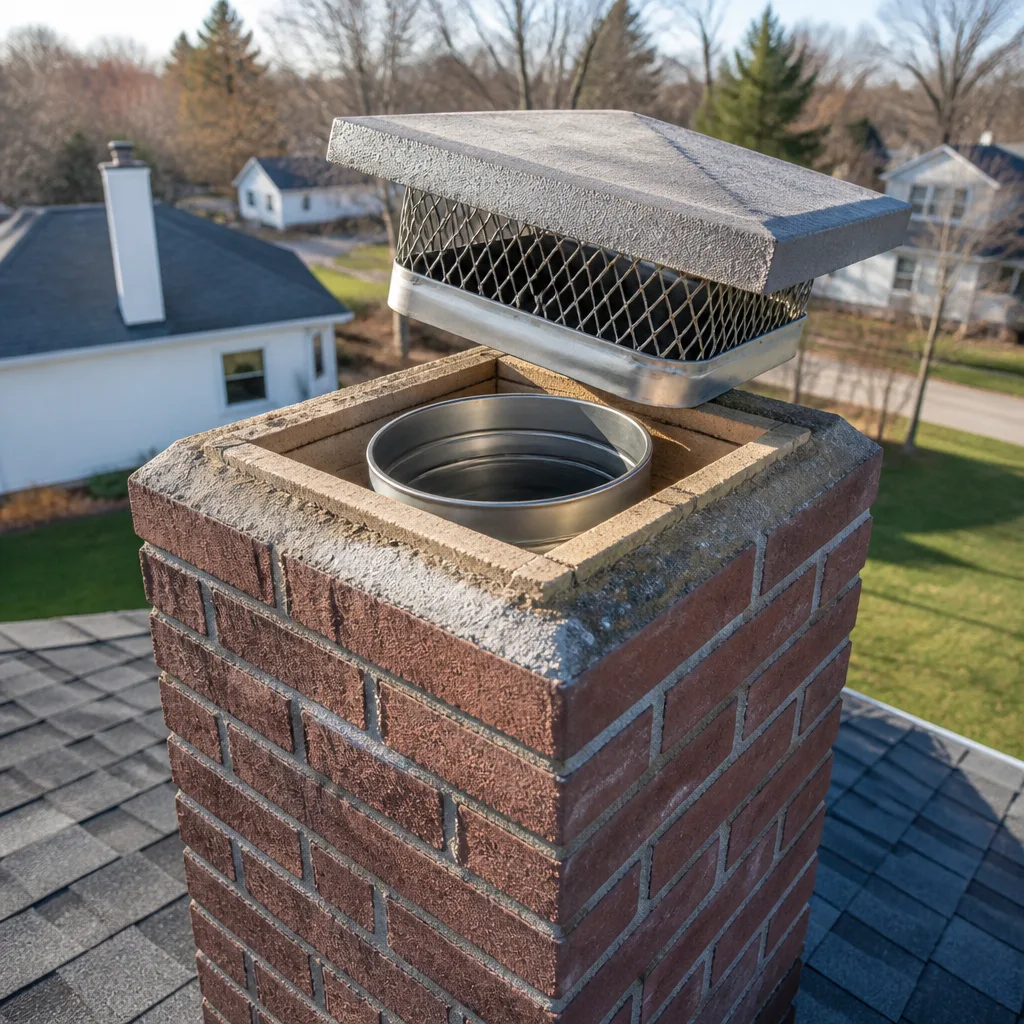 Flue relining
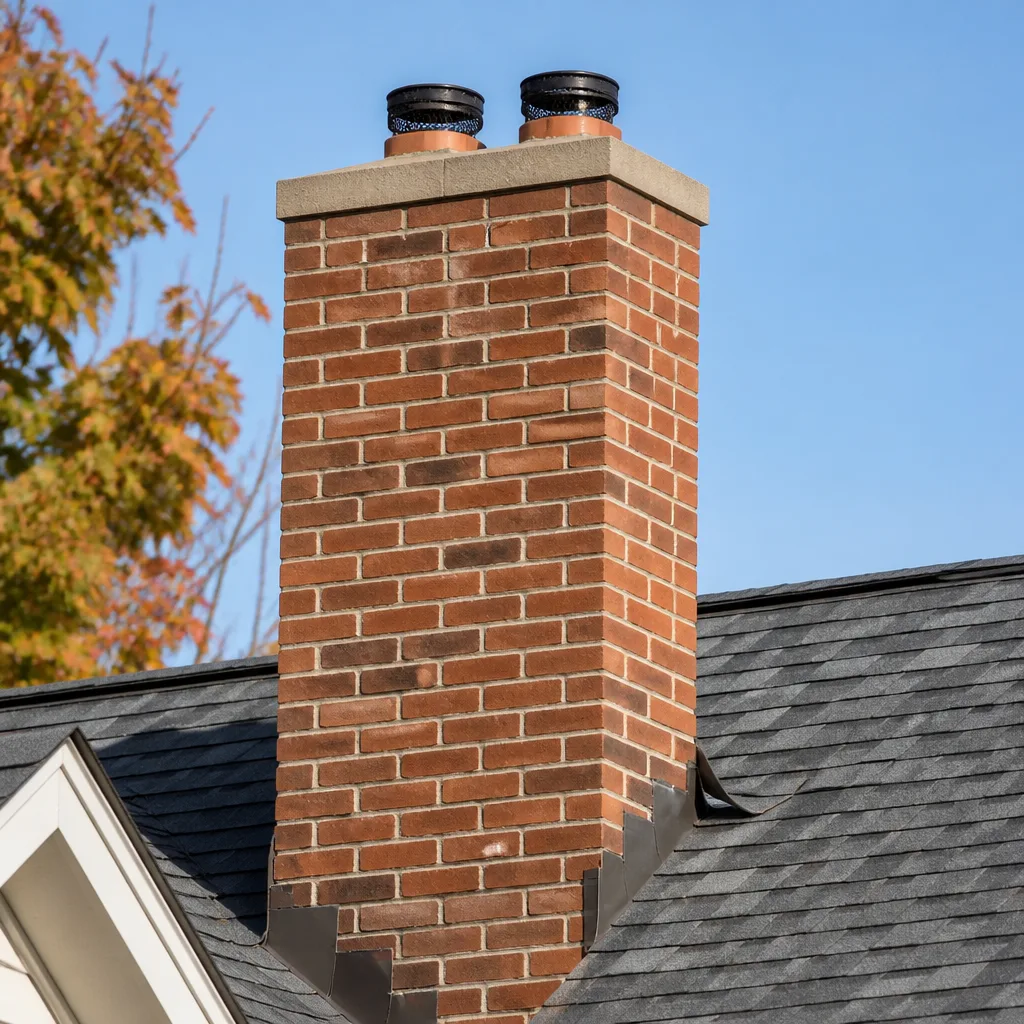 Masonry repair
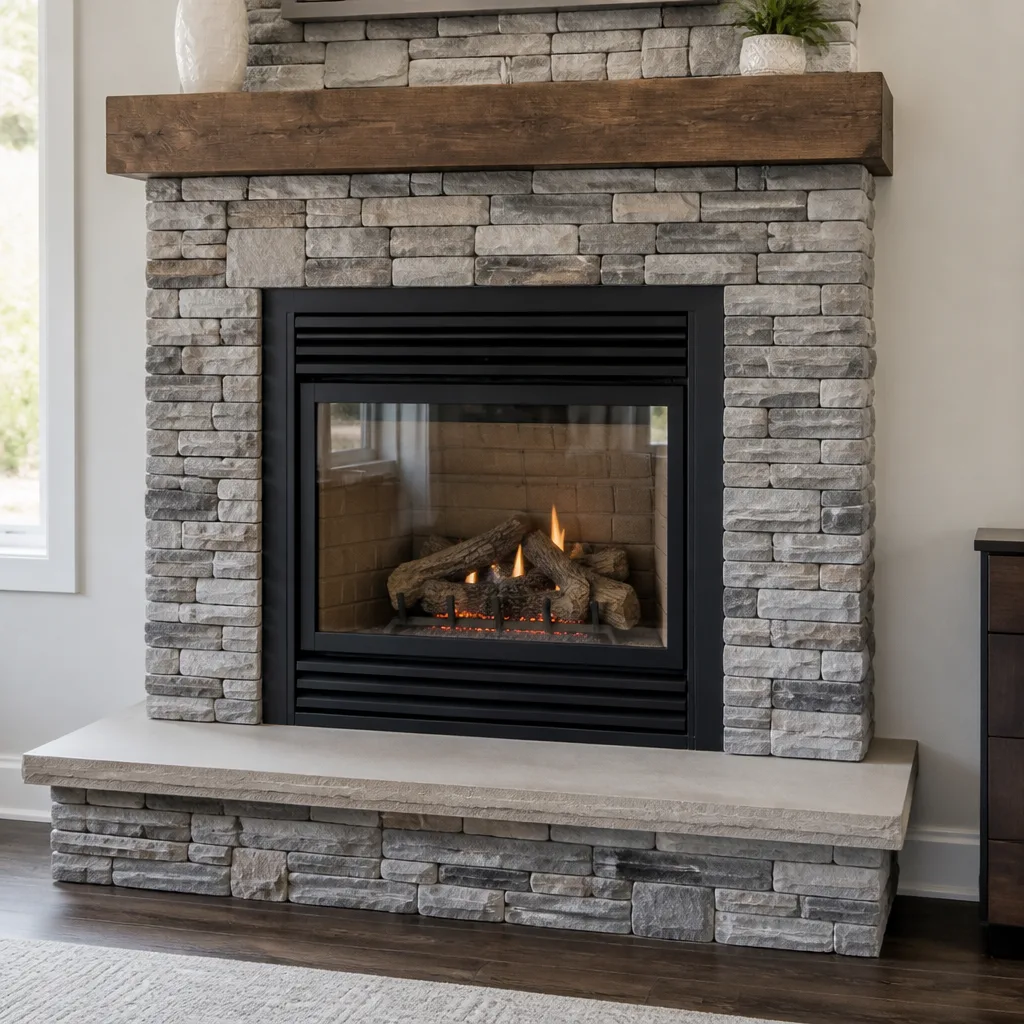 Gas fireplace service
Level 1 sweep and inspection to the NFPA 211 annual standard - flue, crown, cap, and flashing checked and photographed
Chimney sweep logs do not sweep chimneys. They loosen some creosote - which then falls where a brush and vacuum still have to collect it.
Chimney Sweep Maintenance Checklist for Tampa Homeowners
The most dangerous item on any chimney checklist isn’t the one that looks broken. It’s the hairline crack in the liner behind the damper, the one you cannot see from the firebox, that allows carbon monoxide to drift into wall cavities and upstairs bedrooms for months before anyone notices. Tampa’s humidity accelerates this problem: salt air, heavy summer rains, and wide temperature swings between air-conditioned interiors and 95-degree exteriors put constant expansion stress on masonry. This checklist gives you a straight answer: what you can safely check yourself, what belongs in the hands of a certified sweep, and when to act. We built it so nothing slips between the cracks of what you thought you checked.
Quick Answer
A Tampa homeowner should complete five visual chimney checks each month during the burning season (typically October through March): creosote buildup on the damper, white staining on the exterior brick, musty odors near the fireplace, animal debris at the flue opening, and any flaking mortar in the firebox. Anything involving the flue liner, the hidden chase cavity, or the crown must be inspected by a certified chimney technician. In Tampa, plan for a professional sweep once per year regardless of usage, because our humidity causes creosote to absorb moisture and become corrosive even when the fireplace sits idle. If you’re weighing whether to tackle this yourself, read DIY vs Professional Chimney Cleaning: The Tampa Homeowner’s Decision Guide first.
Styles & brands we work with
Table of Contents
- The Two Checklists: What You Check vs. What a Sweep Checks
- The Homeowner Visual Checklist: Five Items You Can Safely Assess
- The Certified Sweep Checklist: What We Check That You Can’t
- Tampa Off-Season Maintenance: May Through October
- What to Photograph After Every Sweep Visit
- Stop-Use Decisions vs. Schedule-Soon Repairs
- Storing Your Checklist Records for Florida Insurance Requirements
- Common Mistakes to Avoid
The Two Checklists: What You Check vs. What a Sweep Checks
Most published chimney checklists blur a critical line. They give homeowners a list that includes items like “inspect the flue liner” or “check the crown for cracks,” implying those tasks are safe for someone with a flashlight and a stepladder. They are not. A homeowner cannot see a flue liner without removing the chimney cap and lowering a camera. A homeowner standing in the yard with binoculars cannot tell whether a hairline fissure in the crown is cosmetic or whether it is letting rainwater saturate the full height of the masonry. We have walked into Tampa homes where homeowners spent weekends “maintaining” chimneys that needed immediate professional attention, and we have walked into homes where owners put off calling us because a generic checklist made them think a visual glance at the firebox was sufficient. The solution is a clean division of labor, no overlap.
Here is the split. You are responsible for observing. We are responsible for inspecting. Observation means using your senses: sight, smell, touch, and hearing. Observation never requires climbing onto the roof, opening the clean-out door behind the chimney, reaching into the flue, or using any tool more complex than a flashlight and a piece of paper. Inspection involves equipment: chimney cameras, creosote density probes, draft measurement tools, moisture meters. It also involves knowledge of what a normal chimney in a specific Tampa neighborhood should look like given its age, construction, and usage pattern. If a checklist item cannot be done from floor level or from the ground outside with your feet safely planted, it goes on the professional list. Period.
This matters more in Tampa than in drier climates because our homes hide chimney problems behind a veneer of normalcy. A chimney that has never been swept in a home that switches between gas heat and a wood-burning fireplace can accumulate a layer of creosote that looks like velvety black paint from the firebox, but is actually a three-quarter-inch glaze fused to the flue wall. You will not see the thickness from below. You will not smell it until it is already off-gassing. That is why the division in this checklist is not a suggestion. It is the entire point.
Kindling Checkpoint: Every chimney sweep in Tampa we perform includes a camera inspection of the full flue height. The footage is yours to keep. If we recommend a repair, you will see the image that justifies it on our tablet before you spend a dollar. No visual proof, no recommendation. That is how we keep the line between observation and inspection honest.
The Homeowner Visual Checklist: Five Items You Can Safely Assess
These five checks take under ten minutes and require nothing but a flashlight, a white piece of paper, and your nose. Do them once a month while you are using the fireplace, and once at the start and end of the off-season. Write down what you observe. What you write becomes part of the documentation trail; for more guides & resources, explore our blog.
1. The Damper Creosote Check
Open the damper and shine your flashlight at the underside of the flue, about two to three feet above the firebox. Creosote appears as a black or dark brown coating, ranging from a dusty film (Stage 1) to a shiny, hard glaze (Stage 3). You are looking for thickness, not presence. A thin dusting is normal after a few fires. A buildup that looks like granulated coffee or brittle black popcorn is a sign that the chimney needs professional attention before the next burn. In Tampa, even a Stage 2 creosote layer absorbs humidity from our air and becomes sticky and corrosive, so what looks “not that bad” in a Colorado home is further along in a Tampa home.
2. The White Staining Walk-Around
Walk around the outside of your home and look at the exposed chimney. White, chalky stains on the brick or stucco are called efflorescence, and they mean moisture is moving through the masonry and depositing mineral salts on the surface as it evaporates. A small amount near the bottom is common in Tampa due to our rain. Efflorescence that climbs higher than three feet or appears in streaks running down from the crown means water is entering from above and saturating the structure. That is not a cosmetic issue. It is the early warning sign of a crown or cap failure, and it will get worse every summer thunderstorm season.
3. The Musty Odor Test
Stand near the fireplace with the damper closed and the doors or glass shut. You are smelling for a damp, earthy, or acrid odor that should not be there. A wood-burning fireplace should smell faintly of ash, nothing stronger. A musty smell means moisture has entered the system and is sitting somewhere it should not: behind a cracked panel, in a saturated liner, or in accumulated debris at the smoke shelf. If the smell is stronger on humid days, that is your confirmation. Do not spray air freshener and move on. The smell is telling you something structural.
4. The Animal Debris Check
Look up into the flue from the firebox and also check around the roofline from the ground outside. Tampa’s warm winters mean chimney swifts, squirrels, and raccoons use open flues as nesting sites year-round, not just in spring. You are looking for twigs, dried grass, nesting material, or the rhythmic chirping of baby birds. If you hear animal sounds from your chimney, do not light a fire and do not try to smoke the animal out. Birds and other wildlife are protected under Florida law, and a burning nest inside a flue is a chimney fire waiting to happen. This is a stop-use and call-a-professional moment. A certified sweep can assess the chimney and install a proper cap once any animals are safely resolved by a licensed wildlife service.
5. The Firebox Mortar Check
Run a flashlight over the mortar joints inside the firebox, the brick or stone area where the fire actually burns. You are looking for gaps, crumbling mortar, or bricks that have shifted out of alignment. Run your finger (gently) over a few joints if they look suspicious. If the mortar crumbles like a dry cookie, the firebox has absorbed too much moisture and the joints are failing. One or two small gaps can wait a few weeks for a professional repair. Loose bricks or a firebox floor that has visible cracks is a stop-use situation. The firebox is the last line of defense between the fire and your home’s framing. It is not a place to defer maintenance.
Quick Answer: The five safe homeowner checks are damper creosote, exterior efflorescence, musty odor, animal debris, and firebox mortar. Everything else requires a certified technician. Do these monthly during burning season and record what you find.
The Certified Sweep Checklist: What We Check That You Can’t
When a certified chimney technician arrives at a Tampa home, they are not just running a brush up and down and calling it a day. A proper sweep is a structured inspection that follows a defined sequence, and you should know what that sequence includes. Here is exactly what a professional Chimney Sweep services check on every visit, in order:
- Full flue camera scan. Before any sweeping, a camera is lowered from the top down and raised from the firebox up. The technician is mapping the full interior: liner material, joint condition, creosote depth, any gaps, cracks, or separations. This is the only way to inspect what you cannot see from floor level.
- Smoke chamber and damper assessment. The technician opens the damper fully and inspects the smoke chamber, the angled area above the firebox that transitions the smoke into the flue. This area is commonly missed by homeowners and even by some sweep operations. Corroded dampers are common in Tampa because humid air enters the chimney and settles there.
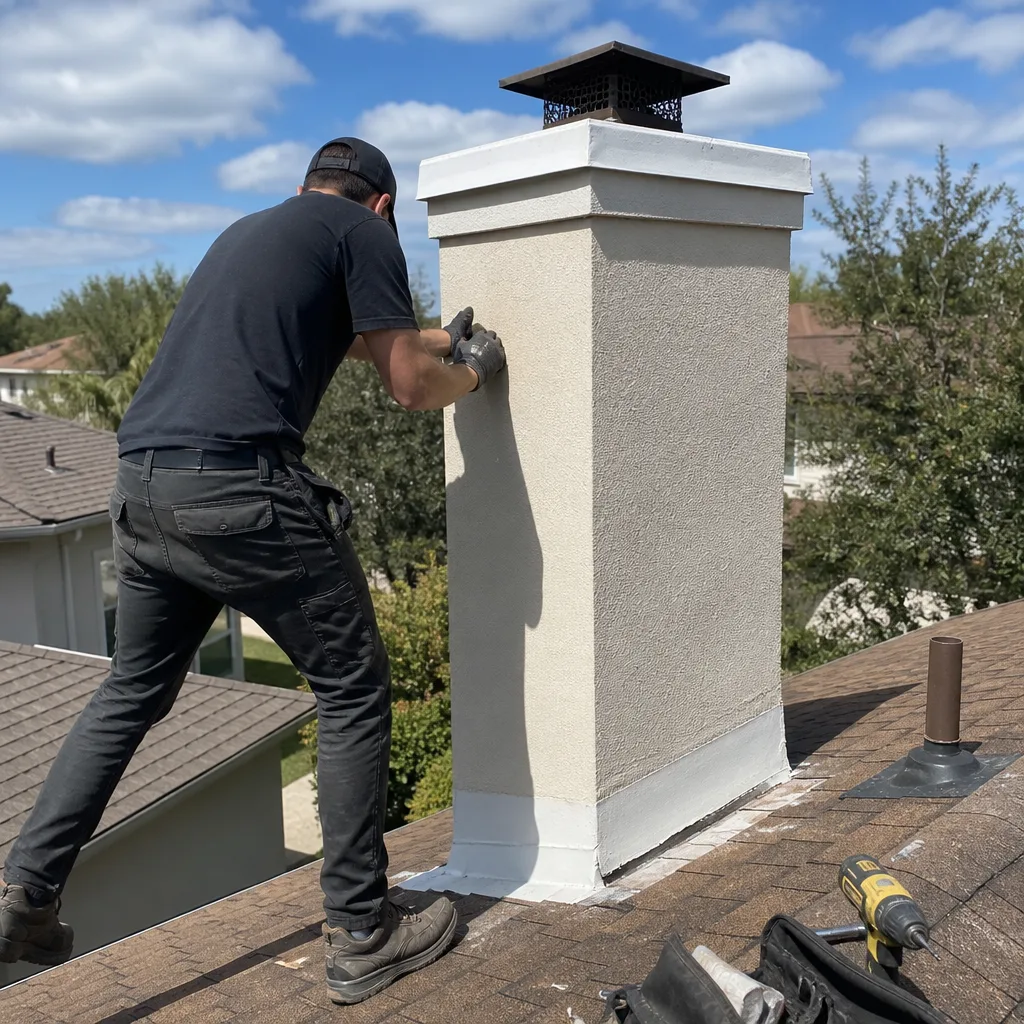
- Crown and cap evaluation. From the roofline, the technician examines the crown (the concrete or mortar cap at the top of the chimney) for cracks, spalling, or separation, and the cap (the metal cover) for rust, blockage, or missing mesh. This is a roof-level assessment, never done from the ground.
- Flashing and mortar joint check. The technician inspects where the chimney meets the roofline and the full height of exterior masonry for failed flashing, open mortar joints, or brick spalling. These gaps let Tampa’s driving rain into the system.
- Clearance-to-combustibles verification. The attic or enclosed chase space above the fireplace is checked to confirm that no framing, insulation, or stored materials are within the legal clearance distance from the chimney. This is a fire-code issue and an insurance issue, not a preference.
- Draft test. The technician lights a smoke test to verify that the chimney draws air up and out correctly. A weak draft in a Tampa home often traces to negative air pressure from the air conditioning system, which pulls air down the flue instead of up. This is a common problem in newer, tightly-sealed Florida homes.
- Sweep and debris removal. Only after all inspection points are documented does the actual sweeping begin. The technician uses brushes sized to the flue and a HEPA-filtered vacuum system to contain dust. A proper sweep leaves the firebox, hearth, and surrounding floor cleaner than the technician found it.
- Post-sweep verification and documentation. A final camera run confirms the flue is clean and the inspection points are resolved. The technician should provide photos and a written report covering each item above. No report, no proof of work. Walk away from any sweep that won’t put findings in writing.
This is the sequence we follow on every chimney inspection in Tampa. The order matters because sweeping before inspecting can destroy evidence. A technician who brushes first and inspects second is erasing the very information that would tell them whether the chimney is safe. Do not accept a sweep that is not also a documented inspection.
Tampa Off-Season Maintenance: May Through October
Most chimney checklists assume a cold-climate usage pattern: burn in winter, clean in fall, forget about it in summer. Tampa is different. Many Tampa homeowners light fires only on the handful of nights between December and February when the temperature dips below 50, then close the damper and forget the chimney exists until next year. That six-month idle period is when the damage happens. Here is what you should do each month during the off-season, May through October:
- May: Close the damper fully and confirm it seats tightly. A damper that leaks lets air-conditioned air escape up the chimney all summer, and it lets humid outdoor air enter the firebox. Place a thin strip of tissue paper on the damper edge; if it waves, the seal is bad.
- June: Check the firebox for any signs of new efflorescence or dampness. June begins the rainy season proper in Tampa, and the first heavy storms reveal crown or cap failures quickly. A dry firebox in June is a good sign; a damp one is not.
- July: Run a dehumidifier in the room with the fireplace if you do not already. Tampa’s July humidity averages above 80 percent, and a closed damper traps moisture in the flue. Keeping the room air dry slows creosote deterioration and prevents musty odors from developing.
- August: Look up into the flue from the firebox with a flashlight and check for any evidence of water staining or rust on the damper hardware. Rust on the damper is a clear sign water is entering from above, because the damper never gets wet from normal use.
- September: Do a full exterior walk-around after afternoon thunderstorms. Look for new efflorescence, wet leaves stuck to the chimney, or dark streaks that suggest water is not running off the structure properly.
- October: Schedule your annual professional sweep before the first cold snap. October is the month when Tampa fireplace usage starts to tick up, and waiting until December means competing with every other homeowner who forgot. An October sweep gives you a clean, documented chimney for the entire burning season.
One more Tampa-specific note: October is also the start of dry season, and dry season in Florida means occasional burn bans and elevated fire risk. A fireplace used during a burn ban is a legal and safety issue. Your annual October sweep is the right moment to confirm your chimney is operating safely so you are never the house that smells like smoke while your neighbors are breathing it in.
What to Photograph After Every Sweep Visit
Paper reports get lost. Digital photos get buried. What you need is a simple system that gives you a year-over-year baseline. This is not busywork. It is the cheapest diagnostic tool in homeownership. Here is exactly what to photograph after every professional chimney sweep, and how to store it:
- The firebox and hearth, before the sweep. Before the technician begins, take three photos from waist height: one straight on, one from the left side, one from the right side. These establish the starting condition. You are capturing any existing cracks, staining, or deterioration so you can tell later whether something is new.
- The technician’s camera images. Ask the technician to send you the top five images from their flue camera scan, specifically: the flue at its cleanest point, the flue at its dirtiest point, any cracks or abnormalities they flagged, the smoke chamber, and the crown from the roof. This is your baseline for what the inside of the chimney looks like in a known condition.
- The clean-up area. Photograph the floor around the hearth after the clean-up is finished. This is not about judging the technician; it is about creating a record of what a proper clean-up looks like so you can compare it in future years. A clean floor with drop cloths removed and no debris is the standard. If next year’s technician leaves a mess, you have photo proof the standard used to be higher.
- The damper, fully open. One photo from the firebox floor looking up at the open damper. This captures the condition of the damper hardware and the first foot of flue. If the damper rusts or warps, you will see the change against this photo.
- The exterior chimney crown. If your roofline allows a safe view from the ground or from a window, photograph the top of the chimney with a zoom lens. Crown cracks grow slowly, and a photo from one year to the next, taken from the same angle, will show the change before you can see it from street level with the naked eye.
Store all of these in a folder on your phone labeled with the date and the technician’s name. Copy them to cloud storage. That phone will be replaced; the folder should not die with it. If you ever file an insurance claim related to chimney damage or a chimney fire, this photo record is your proof of reasonable maintenance. In Florida, where insurance companies scrutinize fireplace claims closely, a homeowner who can produce three years of dated sweep photos is in a much stronger position than one who says, “I think we had it cleaned once.”
We include clean-up photos on every visit as part of the Cedarwell Care Promise: shoe covers and drop cloths go down on arrival, nothing is moved without asking, and a photo of the clean-up is taken before the crew leaves. But your own photos are the ones that matter most. They are yours, they are date-stamped by your phone, and they protect you in ways no invoice can.
Stop-Use Decisions vs. Schedule-Soon Repairs
Every checklist item you identify falls into one of two categories: a condition that means stop using the fireplace now, and one that means get on the schedule in the next few weeks. Most checklists never give you this distinction. Here it is, plainly.
Stop-Use Conditions (Do Not Light Another Fire)
- Animal presence. If you hear animals, see nesting material, or smell a strong animal odor, the fireplace is non-operational until a professional has assessed the chimney and any wildlife concerns are resolved. Burning over a nest is a chimney fire risk and a Florida wildlife violation.
- Loose bricks or a cracked firebox floor. The firebox is your fire containment system. A shifted brick or a crack wide enough to fit a coin means the assembly is compromised. Heat from the next fire can reach the framing behind it.
- Visible smoke entering the room during use. If smoke spills into the living space instead of drafting up and out, that is carbon monoxide entering your home. Do not try to fix it by opening a window or adjusting the damper. Stop using the fireplace and call a chimney professional.
- Strong creosote glaze visible from the firebox. If your flashlight reveals shiny black glass-like coating on the flue walls, that is Stage 3 creosote, which is highly flammable and difficult to remove without professional rotary tools.
- Water actively dripping into the firebox. If you see or hear water entering the chimney during rain, the protective system has failed. Stop burning and get the water intrusion addressed before you use the fireplace again.
Schedule-Soon Conditions (Book Within 2-4 Weeks)
- Mild efflorescence on exterior brick. If the white staining is less than three feet high and does not change between rain events, it can wait for the next available professional visit. Do not ignore it for a year; do not panic tonight.
- Stage 1 or Stage 2 creosote buildup. If the flue shows dusty-to-granular creosote without glaze, the chimney is due for a sweep but not an emergency. Schedule the sweep before the next fire.
- A damper that is sticky or hard to move. A stiff damper is usually a sign of rust or soot buildup at the hinge. It will not cause a fire tonight, but it should be repaired before the mechanism fails completely.
- Minor mortar gaps in the firebox. Gaps smaller than a quarter-inch and bricks that have not shifted are repairable with firebox mortar. Wait for a professional, and do not attempt a DIY patch with standard masonry products.
- Musty odor with no visible moisture. An odor without visible water intrusion usually means stale air or old creosote resting at the smoke shelf. A professional sweep will resolve it. Do not live with it, but do not treat it as an emergency.
The difference between these lists is simple. A stop-use condition puts your family or your home at risk with the next burn. A schedule-soon condition is damage happening slowly, with time to fix it properly. If you are ever unsure which list an observation falls into, call a professional and describe what you see. Any reputable chimney company will talk you through it over the phone. Kindling Chimney Tampa answers live 24/7, so you are not leaving a voicemail when the question involves your home’s fire safety.
Storing Your Checklist Records for Florida Insurance Requirements
Florida homeowners insurance is more expensive and more contested than nearly anywhere else in the country, and fireplace-related claims are scrutinized heavily by adjusters. The question an adjuster asks is almost always the same: “Did the homeowner perform reasonable maintenance?” If you cannot prove you did, the claim goes against you. Here is how to store your chimney maintenance records so they actually help when you need them.
First, understand what counts as documentation. An invoice is good. A written inspection report is better. A dated photo is evidence. A text message saying “the chimney guy came by in March” is nothing. What an adjuster wants to see is a sequence: multiple years of consistent maintenance records from the same or different qualified technicians, showing the chimney was inspected and cleaned at reasonable intervals.
Second, store records in three places. Keep physical copies of invoices and inspection reports in a labeled folder near your other home documents. Keep digital scans in a cloud folder you control (not on a phone that might be lost or damaged). And keep a one-page summary sheet that lists every chimney service visit, the date, the technician’s name, what was done, and what was found. That summary sheet is the fastest way to prove consistency without digging through years of paperwork.
Third, record the things the insurance company actually cares about. An adjuster is not impressed by “annual sweep completed.” They are impressed by: a sweep report that includes liner condition and clearance-to-combustibles verification, a written recommendation and proof the recommendation was addressed, and photos showing before-and-after conditions. If a technician recommends a repair and you decline, the insurance company will hold that against you if the chimney later fails. If the technician recommends repair and you have it done, file the invoice and the post-repair photos immediately. That is the difference between a paid claim and a denied one.
Finally, keep your homeowner visual checklist records too. Your monthly notes of “no change to efflorescence” or “damper closes tightly” show the insurance company you were not an absentee owner. A homeowner who can present a three-year paper trail of monthly observations, annual professional sweeps, and addressed recommendations is the homeowner whose claim gets approved. In Florida, that preparation matters more than almost anywhere.
Common Mistakes to Avoid
- Closing the damper while the fireplace is still warm. A damper closed over a bed of coals traps carbon monoxide in the home and bakes creosote into the flue. Wait until the fire is fully out and the firebox is cool to the touch. We see this mistake more often in Tampa than anywhere because homeowners are trying to keep air-conditioned air from escaping.
- Burning unseasoned Florida wood. Tampa’s humid air makes properly seasoned wood harder to find, and green or wet wood produces far more creosote than dry hardwood. If the wood hisses, pops excessively, or smolders without producing clean flame, it is too wet for the firebox.
- Skipping the annual sweep because “we only use the fireplace once a year.” Infrequent use does not mean a clean chimney. In Tampa, an idle chimney collects dust, moisture, and sometimes wildlife, and creosote that sits in humid air becomes more corrosive, not less. Suspect creosote at a low level, but in the Tampa climate, maintenance is annual by default.
- Using a fireplace during a county burn ban. Burn bans in Florida are issued during drought periods when wildfire risk is extreme, and a single spark from a chimney can ignite dry brush. Check your county’s burn ban status before lighting a fire, and do not assume bans apply only to outdoor burning. Many include residential fireplaces.
- Trying to DIY a chimney cap installation. A cap installed incorrectly, with the wrong clearances or the wrong mesh size, reduces draft, traps moisture, or creates a new fire hazard. Roof-level chimney work belongs to professionals who carry proper insurance and follow Florida building code.
- Ignoring a musty odor because it only happens in summer. A smell that appears when the humidity rises is not a housekeeping issue. It is moisture sitting somewhere in the chimney system, and moisture left unaddressed in a Tampa summer will be structural damage by the following winter.
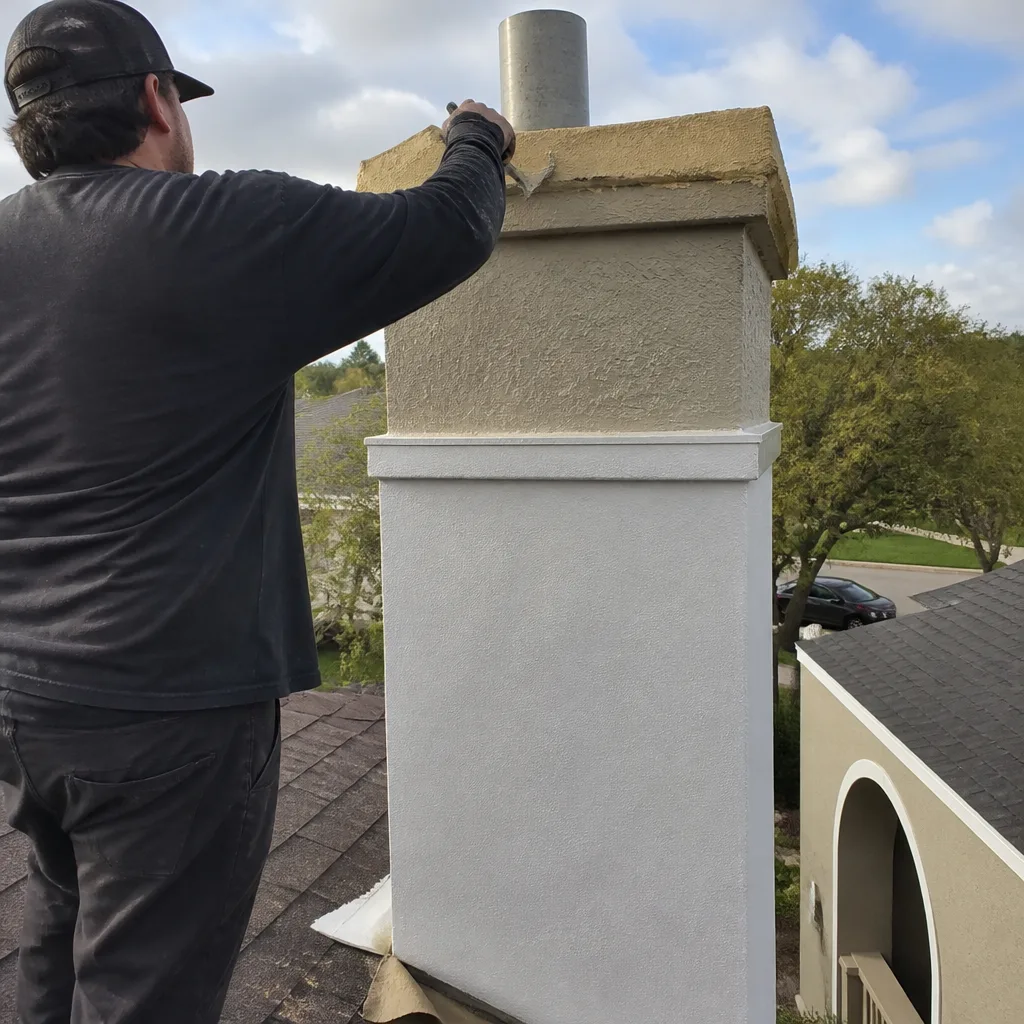
See the difference
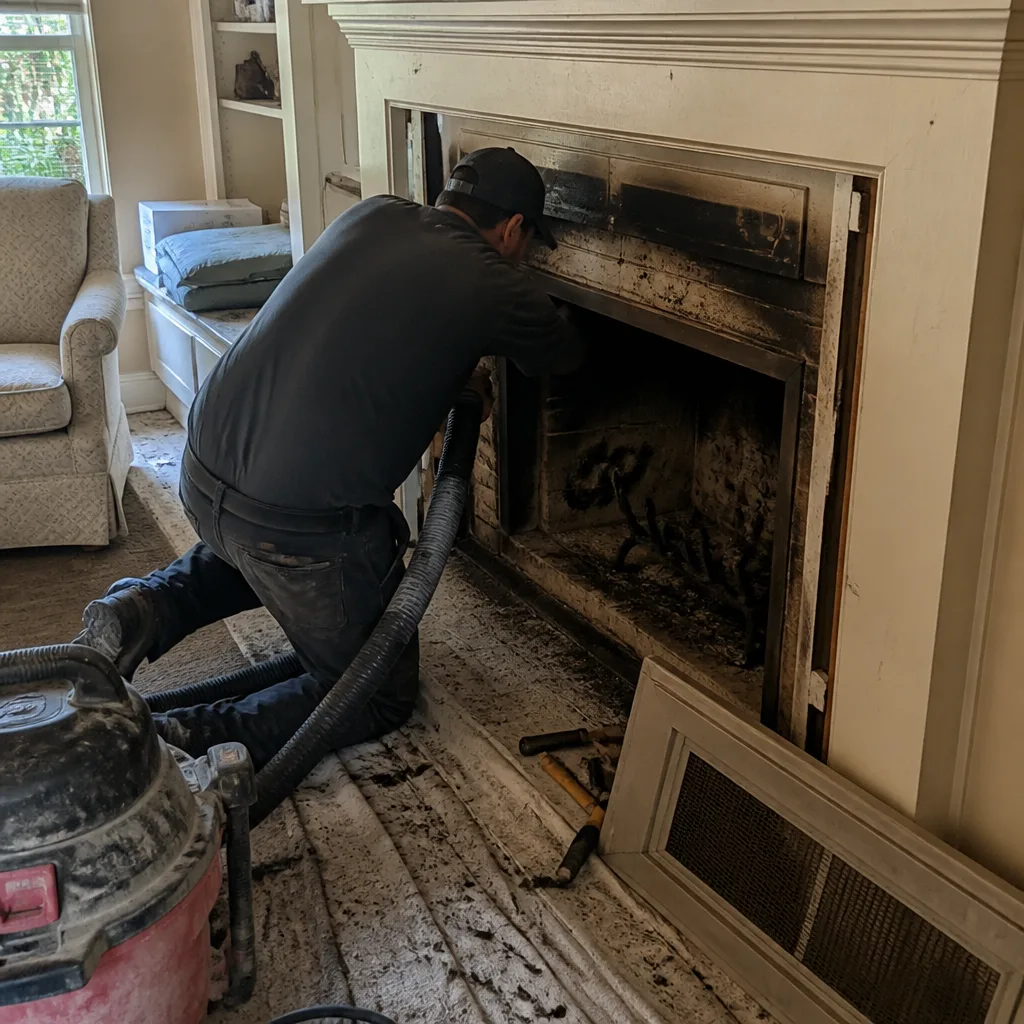 Before
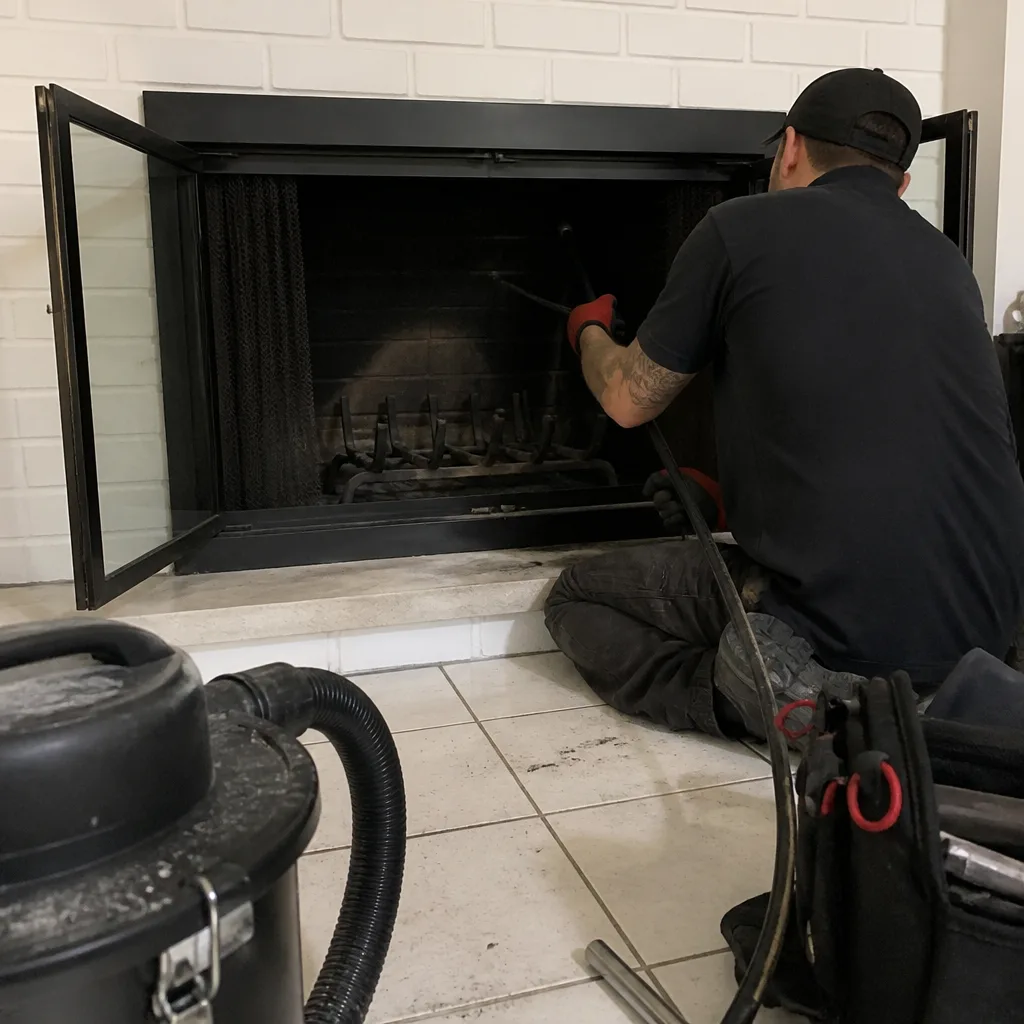 After
After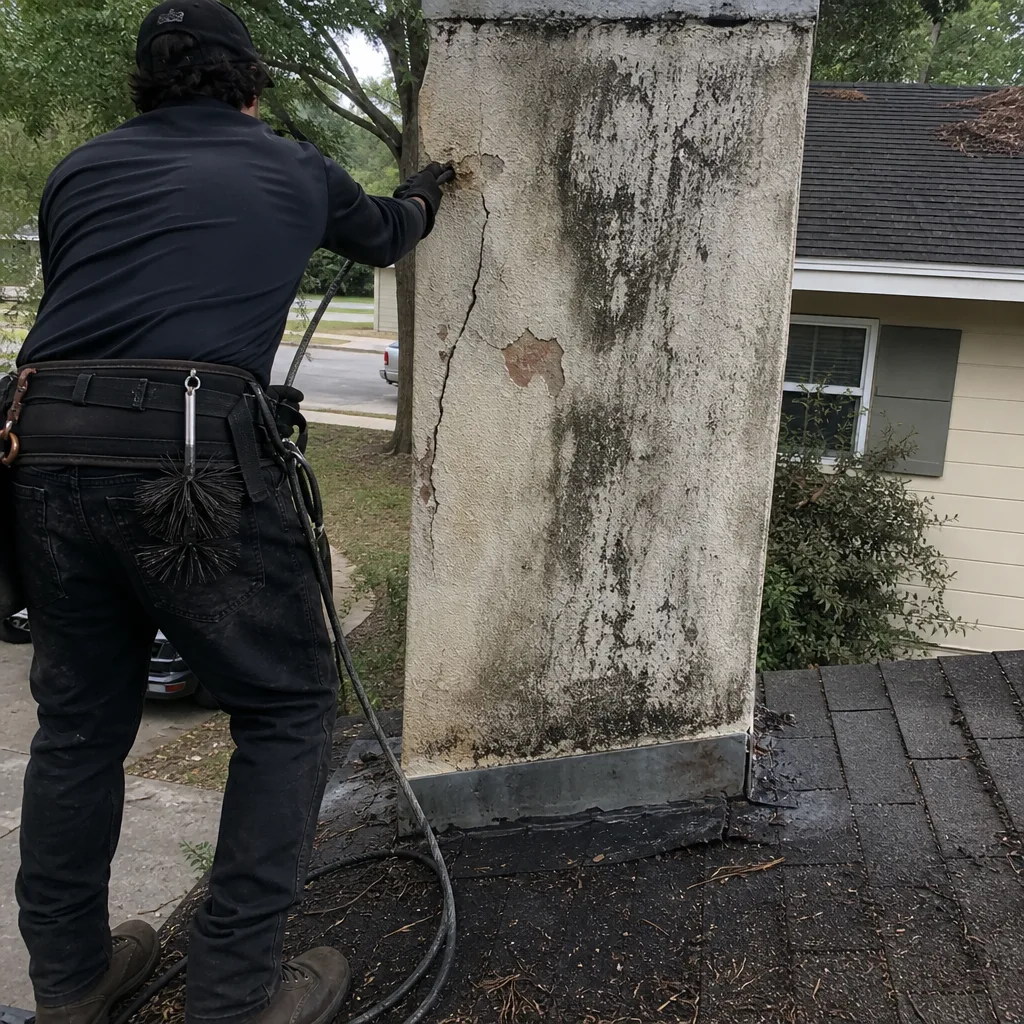 Before
 After
After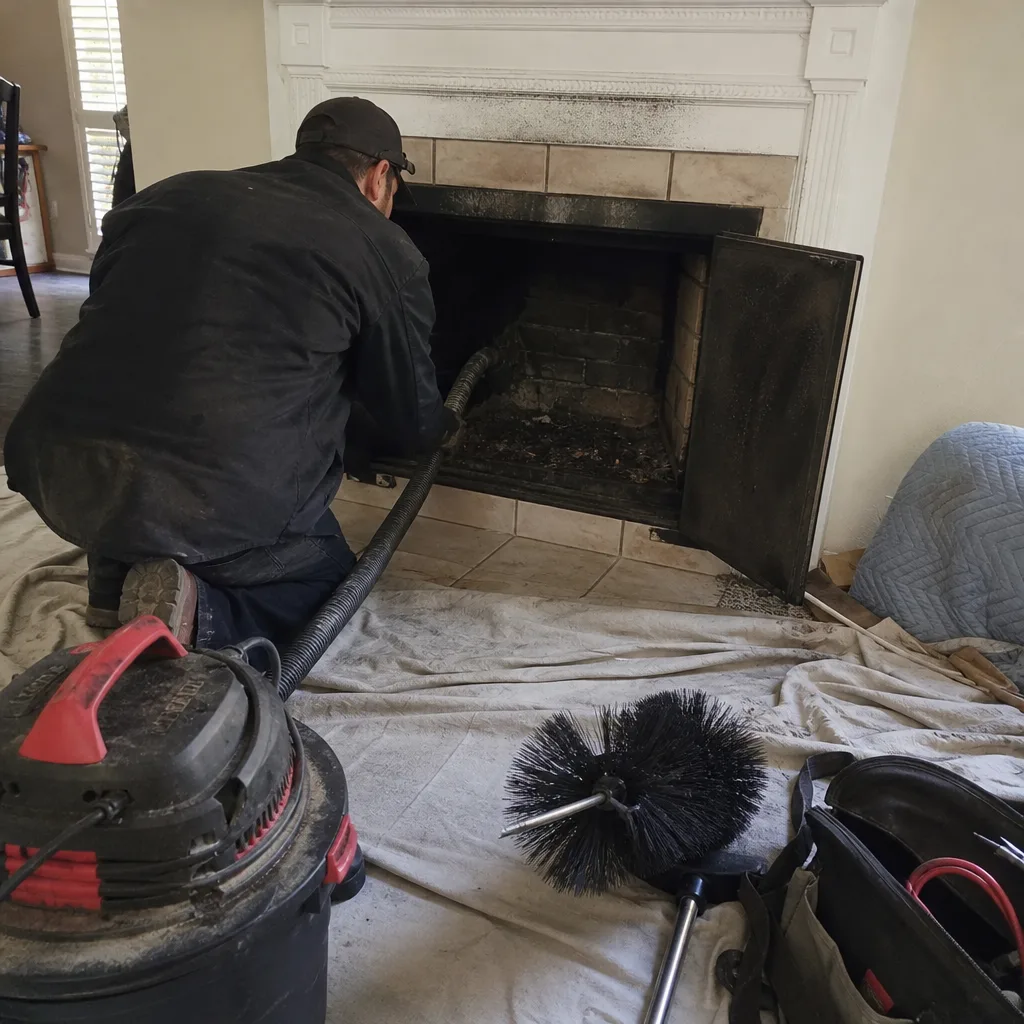 Before
 After
AfterWhen to Call a Professional
Call a certified chimney technician when you observe animal activity, loose bricks, water intrusion, smoke entering the room, or creosote glaze on the flue walls. Call when your visual checks have not been done in over a year and you do not know the chimney’s condition. Call when you have bought a home and the previous owner cannot produce maintenance records. Call when you smell mustiness you cannot explain. And call after any severe storm season, because Tampa’s thunderstorms are the most common external cause of crown and flashing damage. Kindling Chimney Tampa offers free estimates in Tampa; call (850) 290-0897 and a live person will answer.
Frequently Asked Questions
Tampa chimneys should be professionally swept once per year, regardless of how often the fireplace is used; for details on what that entails, see The Complete Guide to Chimney Cleaning in Tampa. The city’s high humidity causes creosote to absorb moisture and become corrosive even during idle months, and the off-season from May through October exposes chimneys to heavy rain and wildlife that cold-climate homes never face. An annual sweep, ideally scheduled in October before the first cold snap, covers both the burning season and the dormant season with one documented visit.
Most standard chimney sweeps in Tampa run between $180 and $320, depending on flue height, creosote level, and whether the chimney has been swept recently. Repairs, liner work, and cap replacement are quoted separately after the camera inspection shows what is needed. Kindling Chimney Tampa gives a written price before any work starts, so the number you agree to is the number you pay. Call (850) 290-0897 for an exact quote; estimates are free.
Yes, you can safely check five items from floor level and from the ground outside: damper creosote, exterior efflorescence, musty odors, animal debris, and firebox mortar joints. Anything involving the flue liner, smoke chamber, crown, flashing, or attic chase requires a certified technician with a camera. Never climb onto your roof for a visual check; the risk is not worth the information you will get.
A sweep removes creosote and debris from the flue. An inspection is a documented evaluation of the entire chimney system: liner condition, clearance-to-combustibles, crown integrity, flashing, draft performance, and code compliance. At Kindling Chimney Tampa, every sweep includes the full camera inspection and a written report, because sweeping without inspecting is a partial job. You should never pay for a sweep that does not include inspection documentation.
You need a new liner when the camera inspection shows cracks, gaps, or separation that would allow heat or gases to escape the flue into the home. Ask to see the camera footage yourself. Any legitimate chimney company will show you the exact image that justifies the recommendation. If a company recommends liner replacement without showing proof, get a second opinion. We use professional-grade liners from trusted brands like DuraFlex and Gelco, and we will show you the before and after images on fireplace repair in Tampa before any work begins. Call (850) 290-0897 for a free estimate with photo documentation.
Not initially, but a chimney fire is a house fire waiting to happen. A chimney fire burns inside the flue, where the creosote ignites and burns at extremely high temperatures, often cracking the liner and sending sparks onto the roof. The damage may be contained to the chimney at first, but a damaged liner from a chimney fire is exactly how house fires start months later. That is why a chimney that has experienced a rapid burn, a loud roar from the flue, or visible flames shooting from the top should be professionally inspected before the next fire is lit.
The Bottom Line
A Tampa chimney checklist only works when homeowners do their five visual checks monthly and leave the structural inspection to a certified professional annually. The gap between those two responsibilities is where dangerous conditions hide, and in Tampa’s heat and humidity, conditions hide well. Document everything: your monthly observations, the sweep reports, the camera photos, the repair invoices. That paper trail protects your family from carbon monoxide and your insurance claim from denial. And when the time comes for the professional visit, choose a company that shows you the evidence, names the price before work begins, and honors the work with a written promise. That is how chimney maintenance should work for every family with kids and pets. Call (850) 290-0897 for a free estimate, or to schedule your annual Tampa chimney sweep before the burning season arrives.
Written by Danny Cortes, Owner at Kindling Chimney Tampa, serving Tampa since 2003.