
Last updated October 15, 2026
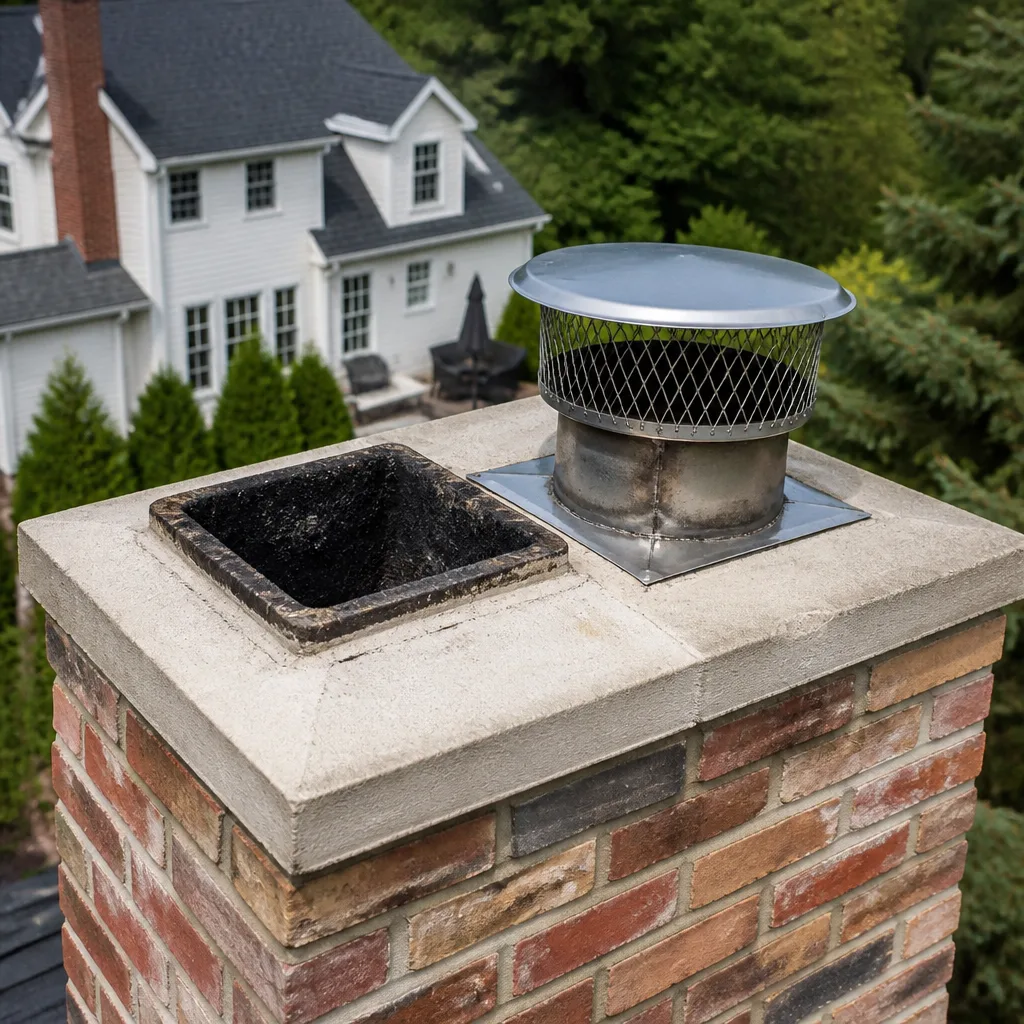 Sweep & inspection
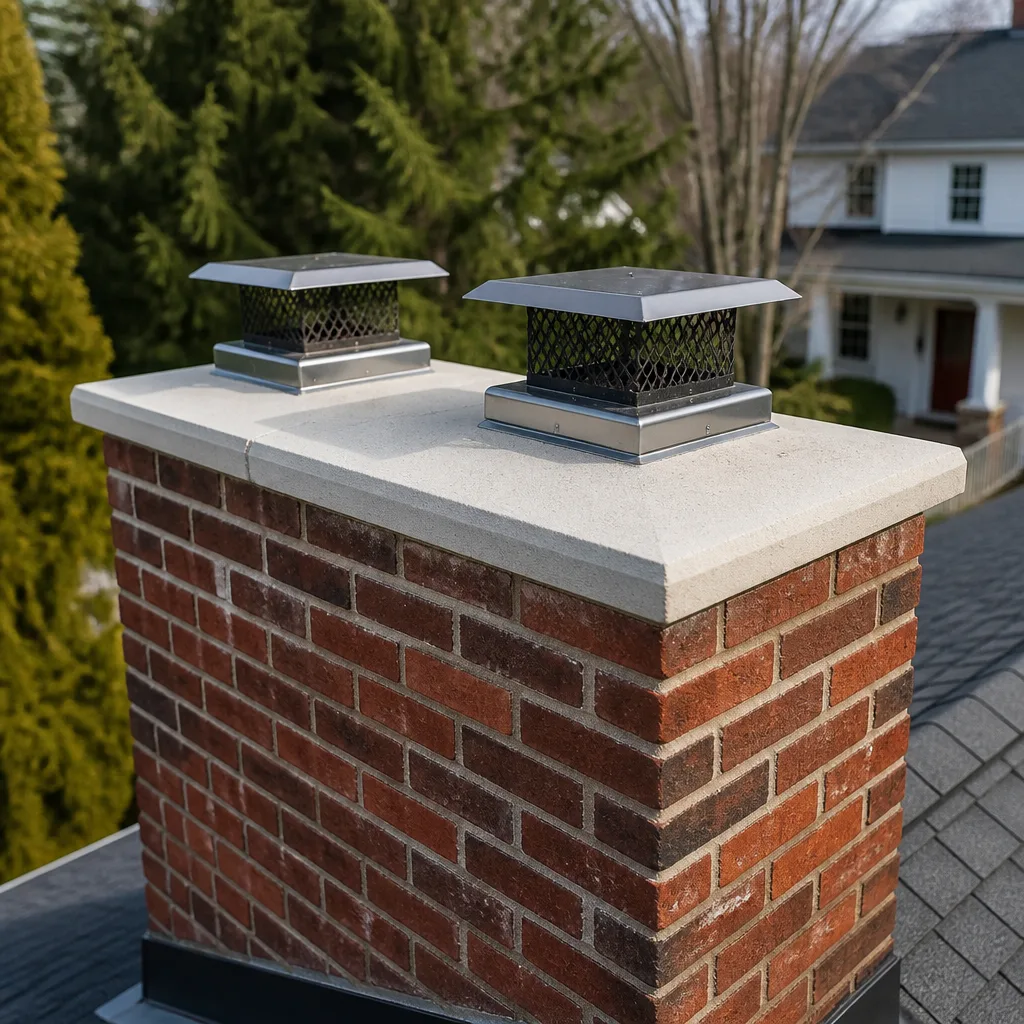 Caps & crowns
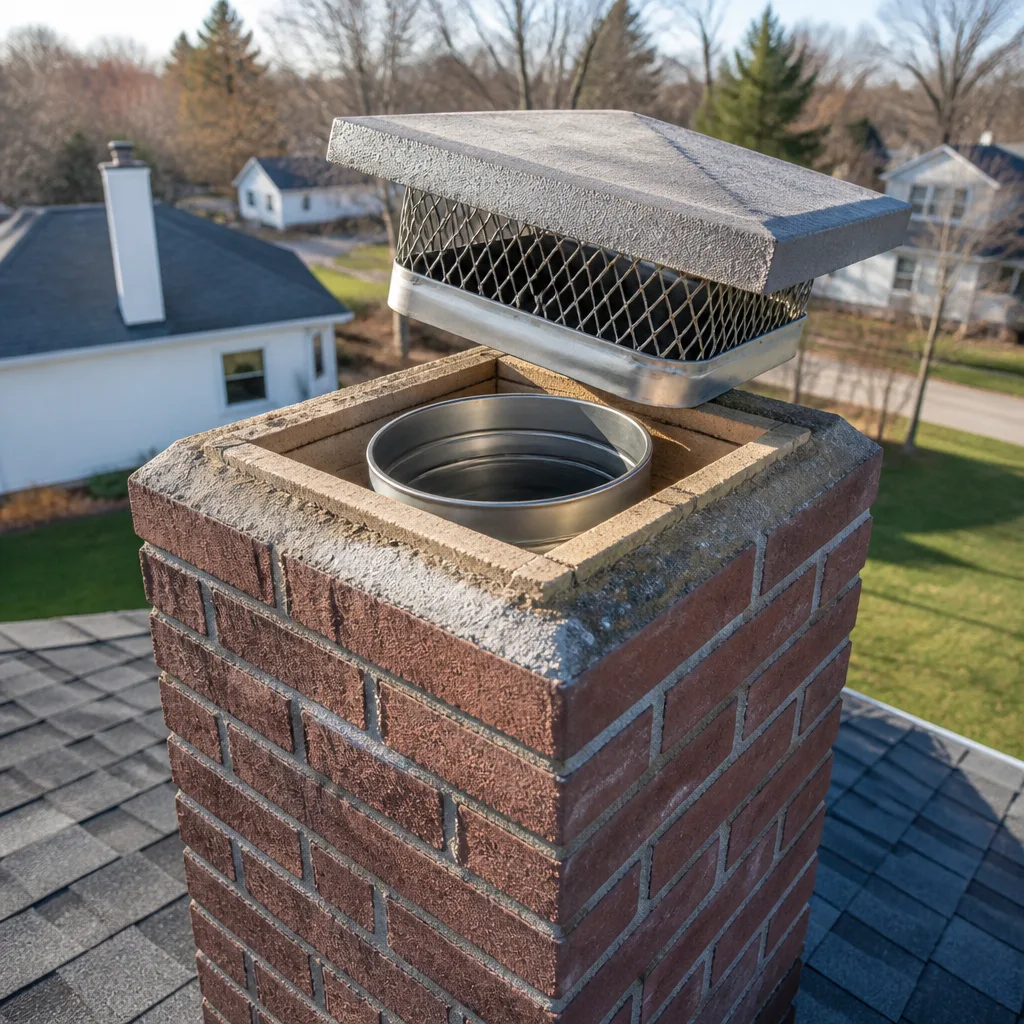 Flue relining
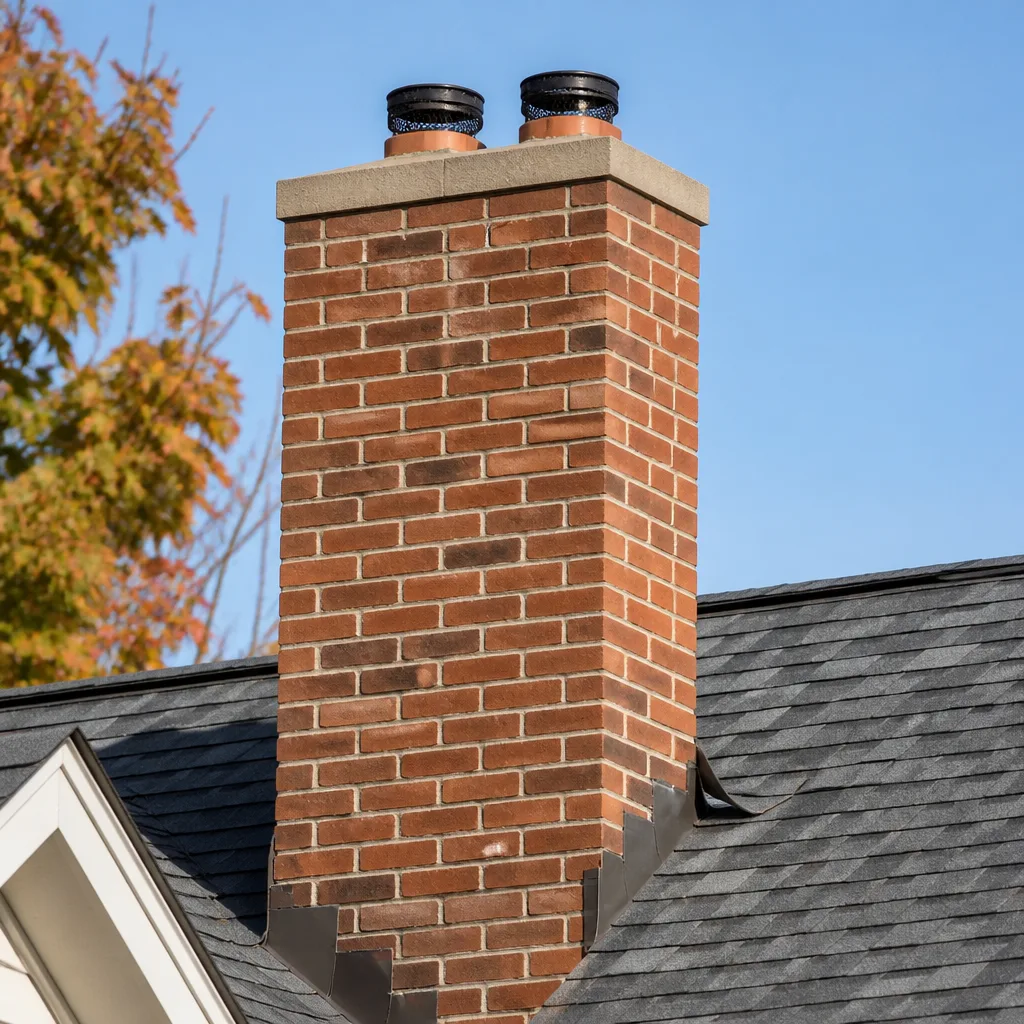 Masonry repair
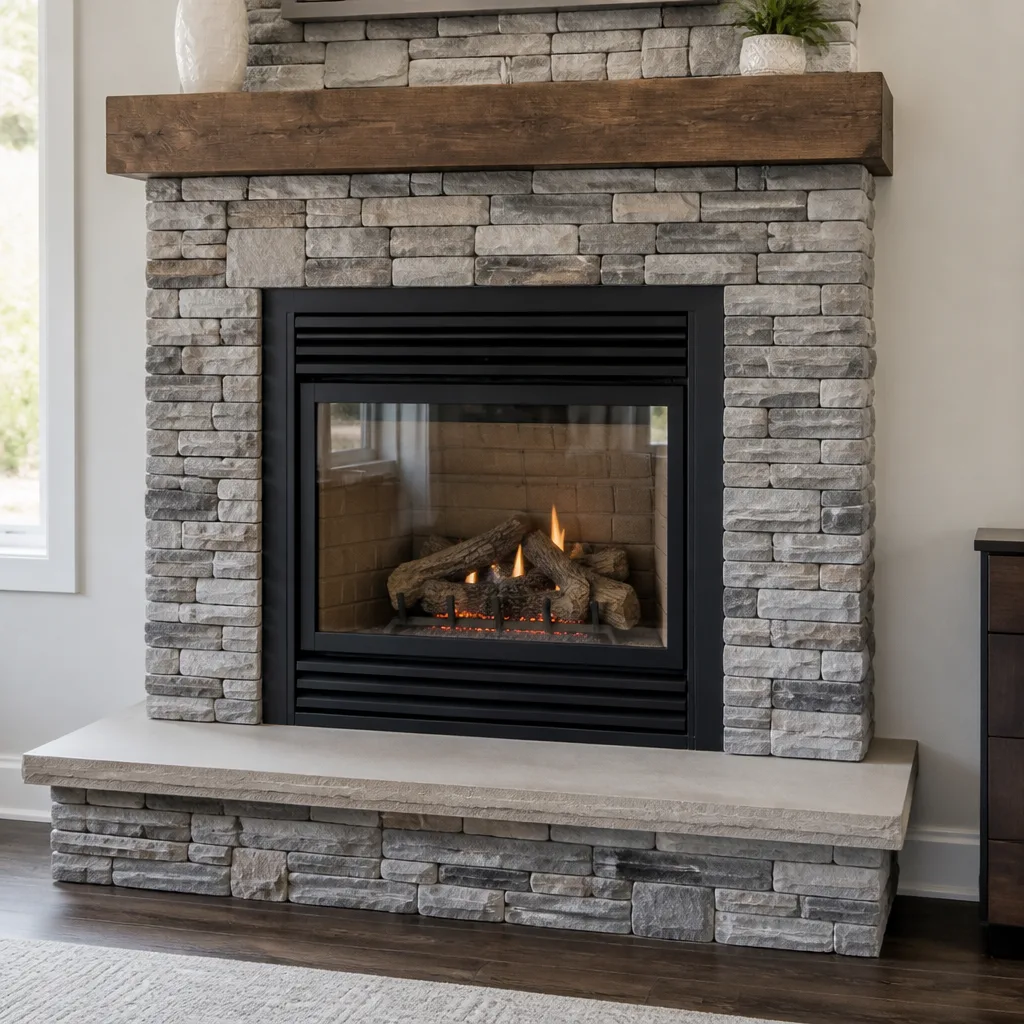 Gas fireplace service
Level 1 sweep and inspection to the NFPA 211 annual standard - flue, crown, cap, and flashing checked and photographed
Chimney sweep logs do not sweep chimneys. They loosen some creosote - which then falls where a brush and vacuum still have to collect it.
Chimney Cleaning Warning Signs: A Tampa Homeowner’s Reference Guide
A white stain creeping down your chimney’s exterior brick isn’t cosmetic discoloration. It’s efflorescence, a direct signal that water is moving through your masonry and carrying dissolved salts outward, which means it’s also moving inward toward your liner. This guide walks through the warning signs that appear in Tampa homes weeks or months before a problem becomes a hazard, so you can recognize what you’re seeing and act on your own timeline instead of reacting to an emergency.
Quick Answer
In Tampa, the earliest chimney warning signs are water staining on interior walls near the fireplace, a persistent campfire smell when the fireplace isn’t in use, flaking masonry on the exterior, and animal sounds or debris coming from the flue. These signals appear before creosote buildup becomes dangerous and before water damage reaches the framing. If you notice any of them, you should schedule an inspection rather than continuing to use the fireplace; our Chimney Sweep Maintenance Checklist for Tampa Homeowners can help you prepare.
Styles & brands we work with
Table of Contents
- Efflorescence, Mold, or Normal Weathering: How to Tell Them Apart on Tampa Brick
- Campfire Smell vs. Sulfur Smell: Two Odors, Two Very Different Problems
- Tampa Pest Warning Signs: Birds, Squirrels, and Snakes in the Flue
- Monitor-and-Schedule vs. Stop Using the Fireplace Today: A Severity Framework
- Documenting Warning Signs Before You Call: How to Photograph Evidence That Actually Helps
- How Tampa’s Climate Accelerates Chimney Problems
- What a Tampa Chimney Sweep and Inspection Actually Costs
Efflorescence, Mold, or Normal Weathering: How to Tell Them Apart on Tampa Brick
Most people standing in their Tampa driveway looking up at a chimney cannot tell the difference between efflorescence, mold, and ordinary weathering, and they shouldn’t have to. But the distinction matters because each one means something different for the repair path and the cost. In our experience, knowing what you’re looking at changes whether you schedule a sweep or a masonry repair, so here’s how we teach homeowners to read their own brick from the ground.
Efflorescence is a white, chalky, crystalline deposit that sits on the surface of the brick. It forms when water travels through masonry, dissolves the natural salts inside the brick and mortar, and then evaporates at the exterior face, leaving those salts behind. Florida’s wet season makes efflorescence common on Tampa chimneys that have hairline cracks in the crown or failing mortar joints. The key visual cue is that it follows the path of water movement: it often appears as streaks running down from a crack, or pooling in a particular band of brick. It doesn’t smear when touched with a dry finger; it’s crusty, not fuzzy. Efflorescence alone isn’t urgent, but it’s a documented signal that water has found a route into your chimney, and that route will widen if left alone.
Mold staining is different, and in Tampa’s humidity it’s not subtle. If the discoloration on your chimney is dark, greenish-black, brown, or runs in patches rather than streaks, you’re likely looking at biological growth, not mineral deposits. Mold on exterior brick tells you that the surface is staying damp for long stretches of time, which either means water is wicking out from inside the chimney or that Tampa’s persistent humidity has found a way into the masonry through surface spalling. Mold on the interior face of the chimney, visible through missing mortar or inside a wall cavity, is a more serious signal because it means moisture is accumulating in the structure of your home, not just on the outside of it.
Normal weathering fools a lot of people. Tampa brick exposed to decades of sun, rain, and Gulf-adjacent humidity simply looks older: color fades unevenly, the surface becomes slightly sandy or pitted, and small chips might accumulate at the base. That’s ordinary aging. The difference is depth. Weathering affects the surface uniformly over time. Efflorescence appears in patterns tied to water migration. Mold spreads in organic-looking patches that darken after rain. If you’re uncertain which one you’re looking at, take a photo and keep an eye on it across two weeks of varying weather. If it grows, moves, or worsens after a hard Tampa downpour, you’re not looking at aging. You’re looking at a pathway for water and you should get an inspection.
Campfire Smell vs. Sulfur Smell: Two Odors, Two Very Different Problems
Odors are the warning sign Tampa homeowners notice most often, and they’re also the one most frequently misdiagnosed. The two smells you should learn to distinguish are campfire and sulfur, and they point at completely different underlying problems. Getting this wrong means calling the wrong person or ignoring the right problem.
A campfire smell inside a closed home is incomplete combustion residue. It’s the smell of creosote, a tar-like byproduct that forms when wood doesn’t burn hot enough or when the flue doesn’t draft properly. In Tampa, the mild winter often works against proper combustion: homeowners burn fires at lower temperatures, or use unseasoned wood because they only light the fireplace once or twice a season, and the wet climate makes it easy for firewood to absorb moisture. All of that leads to creosote accumulation on the flue walls. When the fireplace is cold, especially on humid days, that creosote off-gasses and the smell seeps into the living space. This is the odor that tells you a sweep is overdue. Left alone, creosote is combustible material sitting in your chimney waiting for a hot enough fire to ignite, and a chimney fire is something no family should experience firsthand.
A sulfur smell is entirely different. Sulfur smells like rotten eggs, matches, or gunpowder, and in the context of a fireplace it usually means one of two things: either there’s a gas component to your fireplace and there’s an actual gas leak, or there’s a blockage in the flue that’s trapping exhaust gases and pushing them back into the home. The first is a call to your gas utility. The second is a call to us. Neither is a situation where you should light a fire and see if it clears up. Carbon monoxide is odorless, but the combustion byproducts that travel with it often carry that sulfur note, which is why we treat a sulfur smell from a fireplace as a stop-using-it-today signal.
We’ve also seen a third odor in Tampa homes: a damp, earthy, almost basement-like smell coming from the fireplace in summer. That’s not creosote and it’s not gas. It’s moisture sitting in the flue, often paired with animal organic matter or accumulated leaf debris from live oaks. Tampa’s summer humidity turns a chimney into a condensation chamber, and any water that can’t drain properly produces that musty smell. If you smell damp earth in July, there’s water standing somewhere in the system, and a Chimney Inspection in Tampa will identify whether it’s a crown issue, a flashing issue, or a blocked cap.
Tampa Pest Warning Signs: Birds, Squirrels, and Snakes in the Flue
Tampa’s wildlife uses chimneys like the rest of us use covered parking. Birds nest in open flues, squirrels treat the chimney chase as a hollow tree, and snakes follow the warmth and the rodents. Most homeowners don’t see the animal. They hear it, or they find what it left behind, and the earlier you catch the signs the cheaper the fix. Here’s what to listen for and what to look for.
Sounds That Mean Something Is Living in Your Flue
- Scratching at dawn or dusk, rough and clawed, moving up and down: That’s a squirrel or, in some Tampa neighborhoods, a roof rat using the flue as a highway between the roof and the interior chase. Squirrels are diurnal, so if you hear it during daylight hours it’s almost certainly a squirrel. Roof rats are nocturnal but the sound is similar.
- Fluttering, soft chirping, or a persistent high-pitched peeping: That’s a bird, most commonly a chimney swift. Chimney swifts are protected under federal law, which means you can’t legally remove an active nest. If you hear peeping in spring or early summer, the correct move is to wait until the birds fledge and leave on their own, then book a sweep and cap installation.
- A slow, rustling, almost slithering sound down near the firebox, especially after rain: In Florida, that’s a snake. Black racers and rat snakes both climb and both are drawn to chimneys for the rodent traffic and the trapped warmth. A snake in the flue usually means you have a gap at the base of the chimney somewhere near ground level.
Debris That Tells You Something Has Been There
- Twigs, dried grass, and small sticks falling into the firebox: Classic bird nesting material. If you see any, the flue is open at the top and a nest is either underway or abandoned. Either way, don’t burn with it in place.
- Acorn shells, chewed nuts, or torn insulation visible near the damper: That’s squirrel sign. Squirrels don’t just nest in chimneys; they chew, and the damage they do to flue tiles and sealants adds up quickly.
- Papery wasp nest fragments or mud dauber tubes along the flue wall: Wasps and mud daubers are tireless chimney residents in Tampa, and their nests restrict airflow even when abandoned. We regularly remove old wasp nests during a standard Chimney Sweep in Tampa.
- Fine, dark droppings concentrated in one corner of the firebox: Rodent or bat sign, depending on size. Bat droppings crumble to dust when pressed; rodent droppings stay firm. Either one is a reason to stop using the fireplace and get the system inspected.
A proper chimney cap with a mesh screen solves most pest problems permanently, but the cap has to fit tight to the flue and be installed correctly. This is one of those repairs where the material matters; we use galvanized mesh and stainless caps from Copperfield and Olympia Chimney so the barrier holds against Tampa rain and UV without rusting through in a couple of seasons.
Monitor-and-Schedule vs. Stop Using the Fireplace Today: A Severity Framework
The most common mistake we see in Tampa is under-reaction, followed closely by over-reaction. Homeowners either ignore a warning sign for two seasons because “it seemed minor,” or they panic and stop using a perfectly fine fireplace because of a cosmetic crack. Here’s the severity framework we teach, so you can sort what you’re seeing into the right category.
Monitor and Schedule: These Are Real Warnings, but You Have Time
- Mild efflorescence along a single mortar joint: It’s water intrusion evidence, but it doesn’t require shutting down the hearth. Schedule an inspection within 30 days and avoid letting it ride through another full rainy season.
- Faint campfire smell only on very humid days, no visible smoke staining: This suggests early creosote buildup, but not an immediate hazard. Use the fireplace sparingly and book a sweep.
- Small hairline crack in the chimney crown that doesn’t extend across the full width: Water is getting in, slowly. Document it with a photo and schedule a repair before May, because once June’s daily afternoon storms start, that crack becomes a gutter for rainwater.
- Ash accumulation in the firebox between uses, no other symptoms: Normal operation. Sweep on the recommended schedule, which for most Tampa homes with regular fireplace use is once a year.
Stop Using the Fireplace Today: These Are Not Monitor Items
- Any sulfur or rotten-egg smell: Shut the damper, keep everyone away from the fireplace, and call either your gas utility or a professional immediately. Don’t burn anything.
- Visible heavy creosote buildup: shiny, black, tar-like glaze on the flue walls: This is third-degree creosote, and it’s fuel. A hot fire can ignite it. Schedule a sweep before the next use.
- Water actively dripping into the firebox during or after rain: The chimney has failed at the crown, flashing, or masonry level, and the water is now entering the home. Every Tampa rainstorm compounds the damage to the framing around the flue.
- Animal sounds from inside the flue on a day you planned to burn: Don’t light a fire to smoke out an animal. Suffocation is a terrible way for any creature to die, and a dead animal in a chimney is a problem no one wants to clean up. Wait until it leaves or call for removal help.
- Interior wall staining near the chimney that’s soft, damp, or growing: Water is running down the outside of the flue inside your wall cavity. That’s mold territory and structural timber territory, and every Tampa summer week makes it worse. Stop using the fireplace and get an inspection.
Documenting Warning Signs Before You Call: How to Photograph Evidence That Actually Helps
When you call a chimney company in Tampa, your memory of a “weird white streak” is only half useful. Photographs are the other half. Here’s how to document warning signs so the person on the phone can give you a real answer and the technician who shows up can verify what you saw.
- Photograph the entire chimney from the ground, straight on, at two distances: one wide shot that includes the chimney in context with the roof, and one closer shot that fills the frame with the chimney itself. This gives us scale and orientation before we even climb the ladder.
- Photograph the specific warning sign at an angle to the surface, not straight on: Angled light reveals texture. Efflorescence looks different than mold when the light rakes across it, and a crack reads far more clearly when the camera is off-axis by 20 to 30 degrees.
- Photograph the same area in both morning and afternoon light if you can: Florida sun moves fast. A crack that’s invisible in direct overhead sun will show clearly when the light skims across the brick in the late afternoon. Two photos, two different light angles, is the fastest way to capture what your eye sees.
- Include a reference object for scale: Hold a coin, a house key, or a standard brick next to the defect in one photo. It eliminates the “how big is it” guessing game that wastes diagnostic time.
- For odors, document the conditions: Write down the date, the outside temperature, the humidity if you have a hygrometer, whether the fireplace was used in the last 48 hours, and what the weather was doing. Campfire smell on an 85-degree day with 90 percent humidity tells us more than the same smell on a dry, cold morning.
- For animal signs, photograph the debris in place before you clean it up: Nest material scattered across your living room floor is just mess. Nest material photographed exactly where it fell onto the firebox floor is diagnostic evidence. Don’t sweep it until you’ve shot it.
Bring these photos to the first phone call or send them in ahead of your appointment. When we can see what you’re seeing, the diagnostic conversation starts hours ahead of schedule, and you’ve already grounded the visit in evidence rather than memory.
How Tampa’s Climate Accelerates Chimney Problems
Tampa doesn’t have winter in the way northern cities do, and that changes how chimneys wear. The three forces that attack a Tampa chimney all year are humidity, rain, and heat cycling. Understanding how they combine explains why monitoring matters more here than almost anywhere else.
Humidity means creosote never truly dries. In a Colorado climate, creosote bakes hard and flakes off. In Tampa, it stays tacky, absorbs moisture, and binds to the flue walls more stubbornly. It also means masonry stays damp, which accelerates freeze-thaw damage even though Tampa rarely freezes; what freezes here is the occasional overnight cold snap in January, when water inside micro-cracks expands just enough to widen them by a millimeter. That widening is invisible to the naked eye, but it’s the starting point for efflorescence and bigger cracks.
Rain is the engine behind most of the serious chimney damage we see. Tampa receives roughly 50 inches of rain per year, with a heavy concentration in the June-through-September stretch. A chimney crown with a hairline crack doesn’t fail gradually. It fails geometrically, because every afternoon thunderstorm forces water through the same pathway day after day for four months straight. By the time October comes and the rain eases, the damage done in that single wet season is often more than the previous dry season’s total.
Heat cycling attacks the bond between flue tile, mortar, and brick. Tampa days swing 20 degrees or more routinely, and the chimney, sitting exposed on the roof, expands and contracts with every cycle. Over 10 or 15 years, that constant movement works mortar joints loose. Homes in neighborhoods like Seminole Heights and Palma Ceia, where the housing stock is older and the chimneys date to mid-century construction, often show exactly this wear pattern: solid brick, sound structure, but tired mortar joints that have done decades of daily flexing without a repoint.
The takeaway isn’t that Tampa chimneys fail constantly. It’s that they telegraph their problems early if you know what the climate is doing to them. The indicators are consistent across the Tampa market: efflorescence after wet season, campfire smell during humidity spikes in the fall, and pest activity during migration seasons in spring and early winter.
What a Tampa Chimney Sweep and Inspection Actually Costs
Chimney pricing in Tampa is all over the map, and that’s a problem for homeowners who have no frame of reference. Here’s what we can say honestly about the numbers in this market. A standard chimney sweep in Tampa most often runs between $189 and $325, depending on the condition of the flue, the height of the chimney, and whether there’s visible creosote buildup or animal debris involved. A Level 1 inspection, which is the visual check done during a standard sweep, is typically included in that price from reputable companies. A Level 2 inspection, which adds camera scanning and is what you need after an animal intrusion, a structural change, or a chimney fire, usually adds $150 to $250 on top of the sweep.
What pushes the price higher in Tampa specifically: pest removal if the chimney has to be cleaned out after an active animal situation, heavy third-degree creosote removal that requires chemical treatment or rotary tooling, and masonry repairs like crown sealing or tuckpointing that get discovered during the inspection. These are separate services with their own line items, and a written price before any work begins should be the standard you insist on; see DIY vs Professional Chimney Cleaning: The Tampa Homeowner’s Decision Guide to understand when to call in the pros.
| Service | Tampa Market Range |
|---|---|
| Standard chimney sweep | $189 – $325 |
| Level 1 inspection (included with most sweeps) | Included |
| Level 2 camera inspection | $150 – $250 additional |
| Pest debris removal (heavy organic matter) | $75 – $175 additional |
| Chimney cap supply and installation | $225 – $475 depending on material |
| Crown sealing (minor crack repair) | $200 – $500 |
The reason we quote honestly is straightforward: when you know the range before you call, you don’t have to wonder whether a quote is padded. And when you get a Fireplace Repair in Tampa recommendation, the camera footage should show you the exact defect driving that recommendation. No video, no charge.
Common Mistakes to Avoid
- Burning the fireplace before clearing animal debris: You’re risking a chimney fire from nest material or a suffocated animal inside the flue. Wait until the chimney is inspected and cleared.
- Ignoring efflorescence because “it’s just salt”: Efflorescence is a symptom, not a disease, but it’s a symptom that tells you water has found a path into your masonry. That path doesn’t self-heal.
- Brushing off a damp campfire smell in summer as “normal fireplace smell”: A fireplace should not smell in July. Damp creosote off-gassing in humid weather is a signal the flue needs attention.
- Skipping the chimney cap because “birds never happened before”: Birds happen every year in Tampa. The only reason they haven’t happened before is that the chimney hasn’t been open long enough.
- Using a pressure washer on your chimney to “clean up the stains”: That pressure forces water deeper into the masonry and accelerates exactly the damage you’re trying to hide. Efflorescence comes back and brings cracks with it.
- Waiting until fall to schedule a sweep because “that’s when I’ll start using it”: Every Tampa chimney company is booked solid in November. Schedule in August or September and you’ll have your pick of appointment times before the first cool front.
- Not asking for a written price before work begins: If a company won’t commit a price to paper before starting, you’re agreeing to an open-ended invoice. The Kindling Chimney Tampa home standard is exactly the opposite: written price, always, before anything starts.
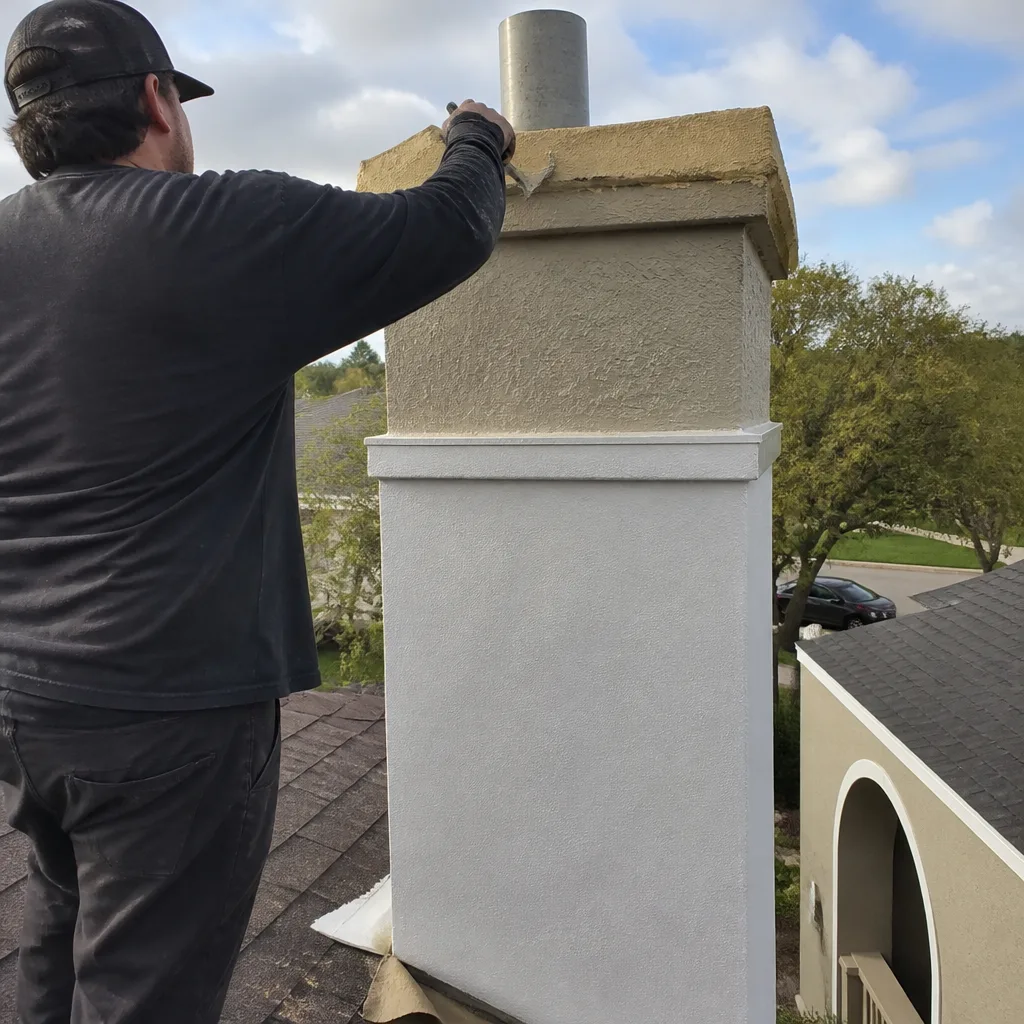
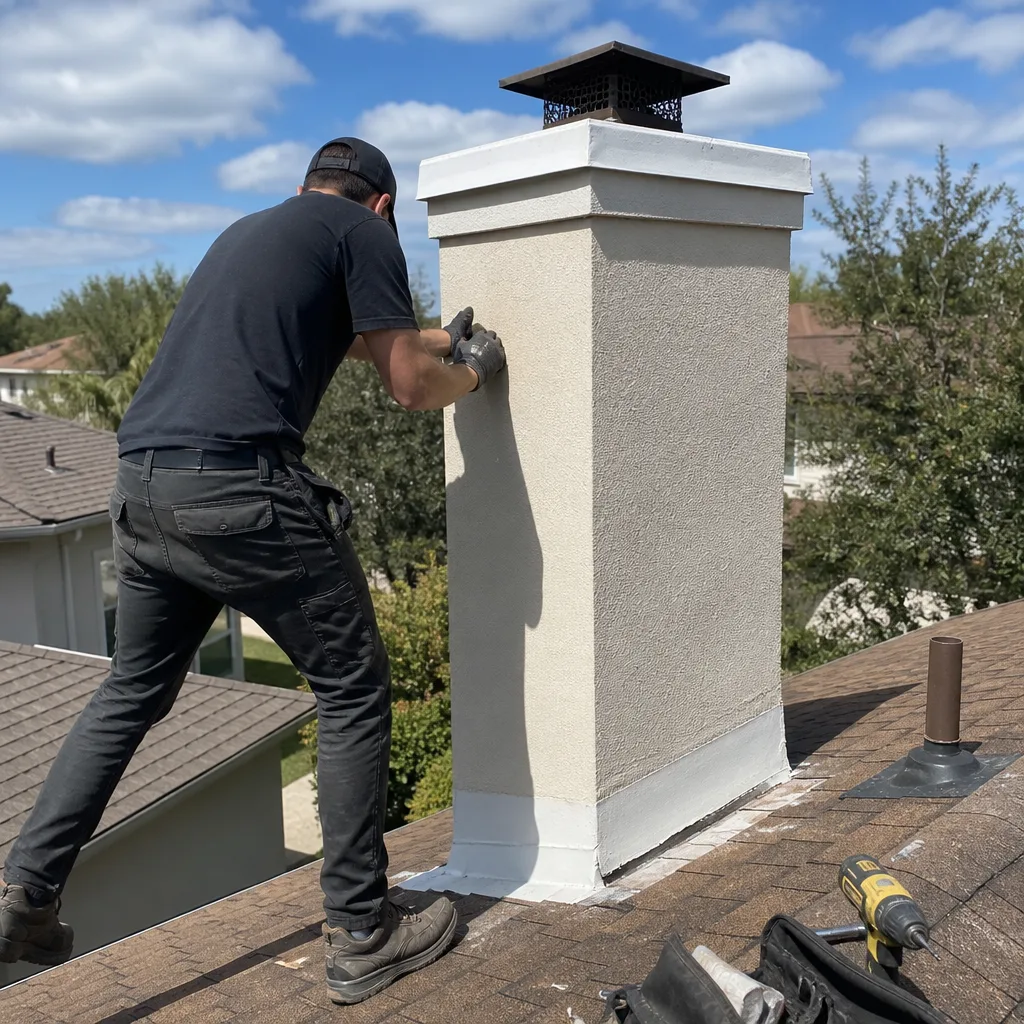
See the difference
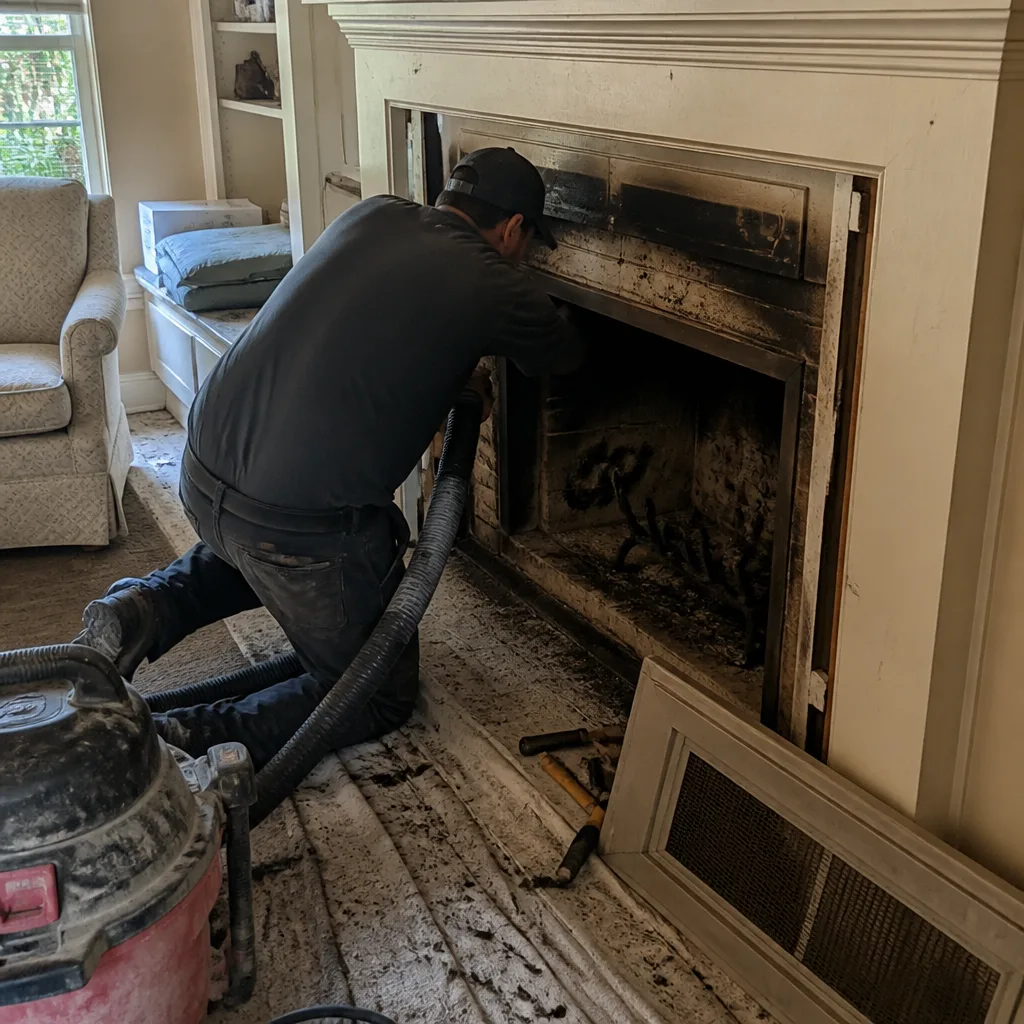 Before
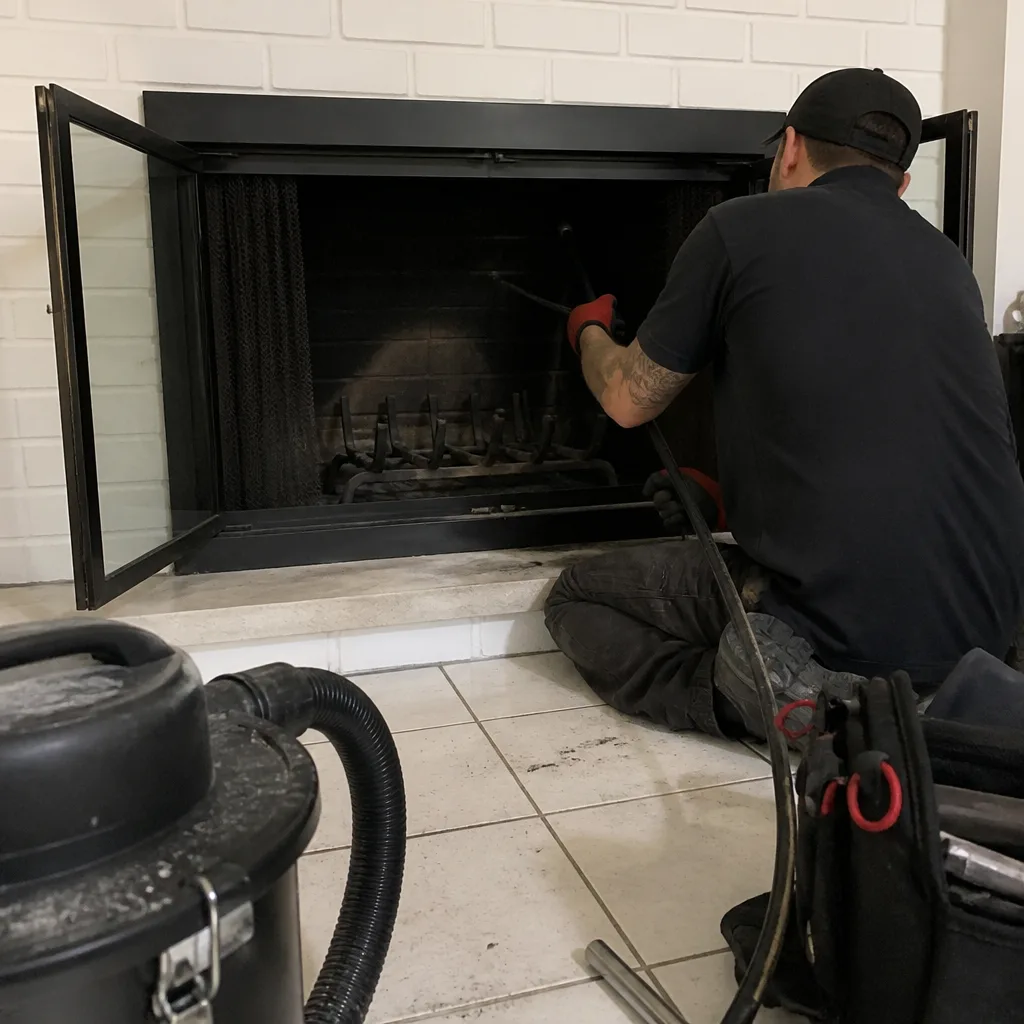 After
After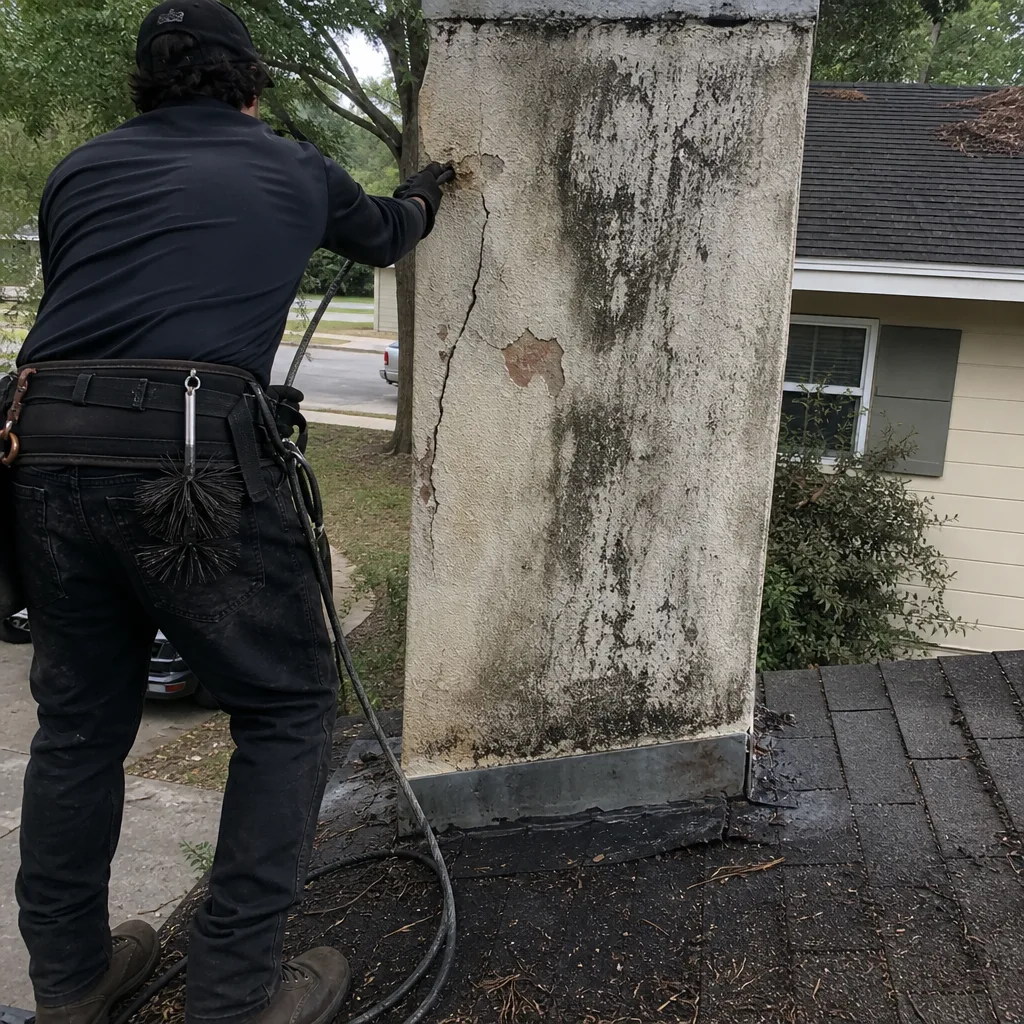 Before
 After
After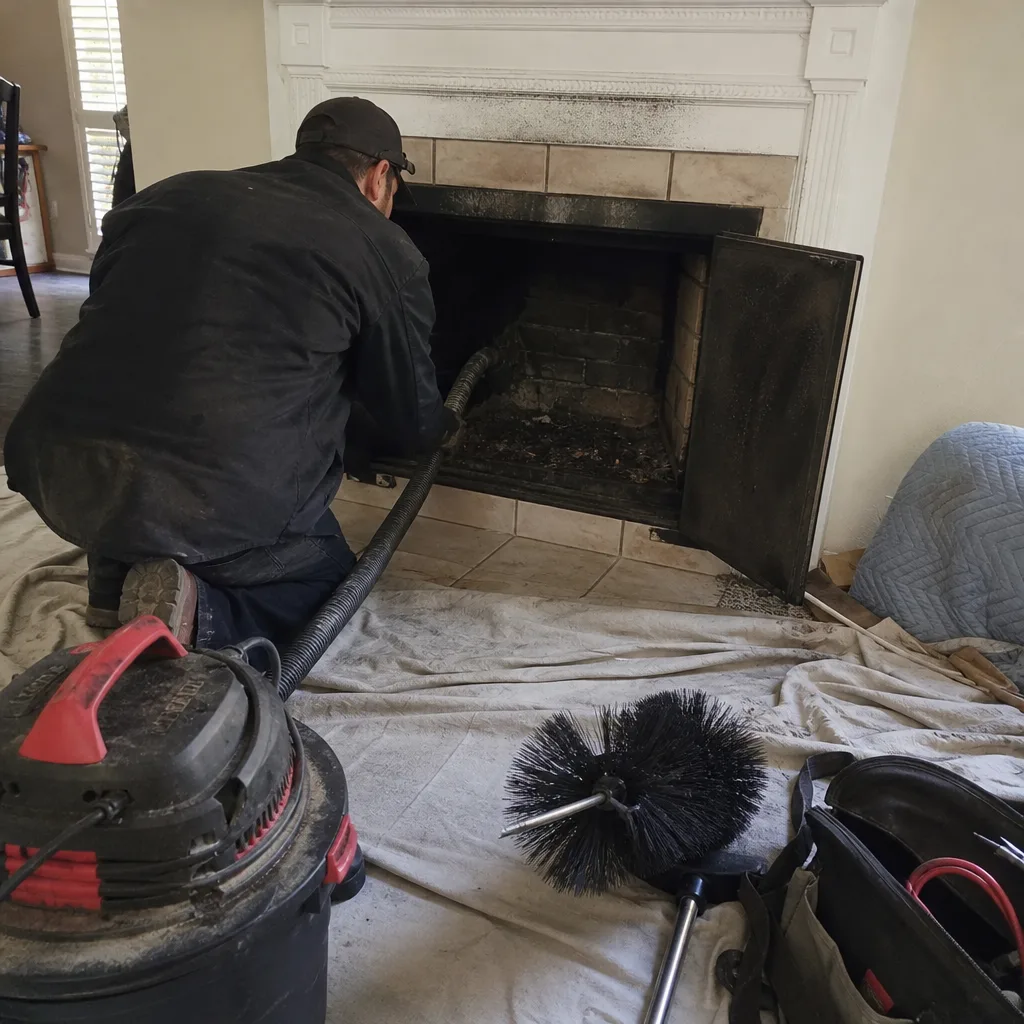 Before
 After
AfterWhen to Call a Professional
Call a chimney professional when any of the warning signs in this guide appear and you’re not sure which category they fall into. That’s what we’re here for, and a phone call costs nothing. You should absolutely call, not email, when you smell sulfur, when water is actively entering the firebox, when you hear live animals in the flue, or when you’ve noticed the same warning sign for two seasons running and it hasn’t resolved. For everything else, a photo and a quick conversation usually get you a clear answer fast.
Kindling Chimney Tampa offers free estimates in Tampa. Call (850) 290-0897 and a live person answers, no matter the hour. We’ll walk through what you’re seeing and help you decide whether it’s a monitor item or a schedule-now item.
Frequently Asked Questions
A standard chimney sweep in Tampa typically costs between $189 and $325, with the final price depending on flue condition, chimney height, and whether animal debris or heavy creosote is present. Most reputable Tampa companies include a Level 1 visual inspection with the sweep, and camera-based Level 2 inspections add roughly $150 to $250 when needed. Call (850) 290-0897 for an exact written quote before any work begins.
In Tampa, chimneys used regularly should be swept once per year, ideally before the cooler months when fireplace use starts. The humid climate keeps creosote sticky and slower to dry out than in drier regions, which means it accumulates differently and often faster on interior flue walls. A yearly sweep also catches pest debris from birds, squirrels, and other animals before it becomes a fire hazard.
Creosote smells like a campfire that never quite left, a smoky, tarry odor that lingers even when the fireplace is cold. On humid Tampa days the smell intensifies because moisture releases the volatile compounds in the creosote. If you notice the smell on days you haven’t burned anything, the flue likely has enough buildup to warrant a sweep.
A rotten egg or sulfur smell from your fireplace means either a gas leak in a gas-burning fireplace system or a blockage trapping exhaust gases and pushing combustion byproducts back into the home. Both are stop-using-the-fireplace-today situations. Call your gas utility first if you have a gas fireplace, then a chimney professional to inspect the flue.
Yes. Bird nests, squirrel nests, and accumulated twigs and grass inside a flue are dry, combustible material sitting directly in the path of rising heat and sparks. Even a small fire can ignite nest material, and the resulting chimney fire can spread quickly through the flue. Never burn a fireplace with known animal debris inside it, and always cap an open flue to prevent nesting in the first place.
A Level 2 chimney inspection is strongly recommended before buying any Tampa home with a fireplace, especially if the home was built before 1990 or if the seller cannot document recent chimney service. Older Tampa homes in neighborhoods like Seminole Heights and Palma Ceia often have original flue tiles and crowns that have weathered decades of humid Florida climate. A camera inspection before closing catches liner damage and water intrusion while you still have negotiation leverage.
The Bottom Line
Tampa chimneys rarely fail without warning, but the warnings are easy to misread if you don’t know what you’re seeing or smelling. Efflorescence, damp campfire odors, pest debris, and interior water staining are all signals the chimney is communicating, and each one points to a different fix at a different urgency level. Learn the categories in this guide, photograph what you see, and you’ll never have to guess again. When you need help sorting the signals, call (850) 290-0897 for a straight answer and a written price before anything gets done, or explore more guides & resources on our blog.
Written by Danny Cortes, Owner at Kindling Chimney Tampa, serving Tampa since 2003.